April 13, 2026 at 1:00 PM ET
Webinar Recap: AI Adoption in Research Administration
At Emerging Research Institutions
Access Webinar Recording
Please fill out this form to access the recorded webinar.
Research administration leaders are being asked to do more with less while policy requirements, compliance expectations, and operational complexity keep rising. In our latest Atom webinar, Tomer du Sautoy hosted Dylan Ruediger, PhD and Ruby MacDougall, PhD from Ithaka S+R to unpack what AI adoption actually looks like on the ground at Emerging Research Institutions (ERIs).
The conversation was based on two NSF GRANTED-supported workshops run in partnership with Montclair State University and Chapman University, with participation from 63 professionals across 26 academic and medical institutions.
Rather than AI hype, the session delivered a practical picture of where institutions are today: real progress in targeted workflows, persistent barriers around trust and governance, and a clear need for shared strategy.

Why This Conversation Matters Now
The webinar highlighted a core tension: ERIs often have ambitious research goals but limited staffing depth, fragmented systems, and uneven access to AI support.
That creates a high-stakes environment where AI can be valuable, but only if implementation is intentional.
Across both workshops, participants consistently pointed to three realities: administrative burden is increasing faster than capacity, institutional desire to experiment with AI is outpacing governance and policy, and efficiency gains alone are insufficient unless they connect to larger institutional outcomes.
What Institutions Are Seeing in Practice
1) Trust, Reliability, and Data Risk Are Non-Negotiable
Research administrators manage high-consequence work where accuracy, consistency, and confidentiality matter. Participants voiced concerns about the use of sensitive institutional data in third-party tools, the reliability of outputs for compliance-heavy tasks, and the complexities of intellectual property and ownership of submitted content.
The takeaway was clear: adoption depends on trusted systems, transparent governance, and clear boundaries for acceptable use.
2) Readiness Is Uneven Across and Within Institutions
Some teams have already piloted AI for practical tasks such as drafting support, process triage, and policy interpretation. Others are still in early exploration.
This unevenness creates internal gaps in AI literacy, confidence, and access to training. Furthermore, without a shared language for evaluating tools and outcomes, cross-unit coordination becomes difficult. Participants emphasized that adoption cannot be left to isolated champions.
3) Strategy Is the Missing Layer
Many institutions are encouraging experimentation, but without a roadmap, efforts remain ad hoc. The workshop discussions repeatedly pointed to the need for institution-level AI priorities tied to research strategy. Developing role-specific implementation plans and establishing clear decision rights across research offices, IT, legal, compliance, and leadership are critical for cohesive progress.
Promising Use Cases Highlighted in the Webinar
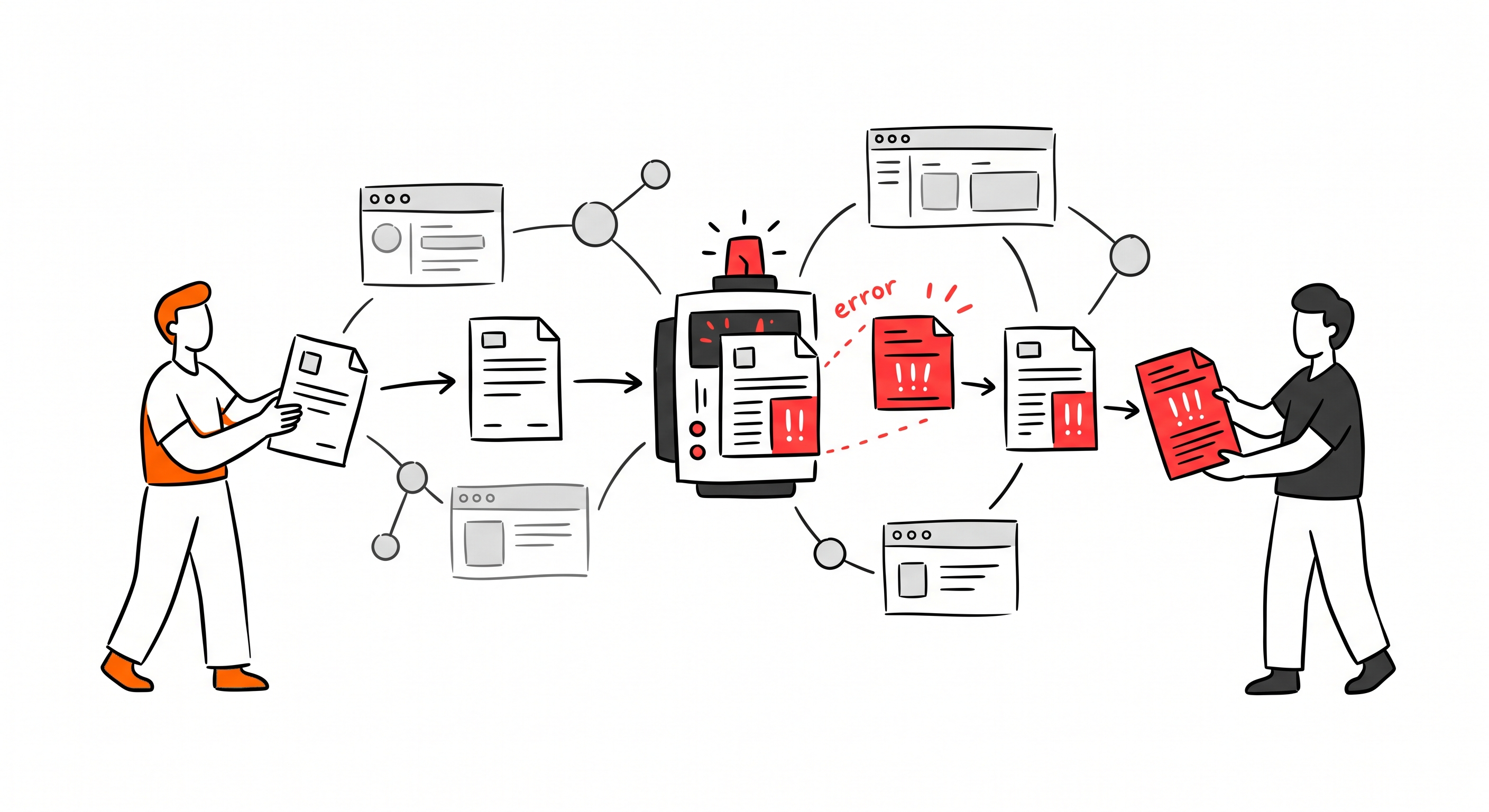
While no one suggested AI is a silver bullet, attendees identified practical, high-value applications that can reduce friction in daily operations. These include risk-based proposal and compliance review, early detection of problematic language in contracts, and administrative workflow triage. AI is also showing promise in providing structured support for generalist staff covering specialized functions.
Two community-driven examples discussed in the session were TritonGPT at UC San Diego, highlighted for its institutionally grounded implementation, and Vandalizer, a project born from collaboration between the University of Idaho and Southern Utah University designed specifically to scale research administration process support.
These examples resonated because they prioritize local context, governance, and practical utility over generic automation.
Q&A Highlights
The live Q&A reinforced several major themes from the presentation. Most attendees expect AI capabilities to improve meaningfully over the next two to five years, though near-term value is more likely to come from iterative efficiency gains rather than fully autonomous workflows.
Interestingly, institutions with more hands-on experimentation tend to have more realistic and constructive expectations about what the technology can actually deliver today. The discussion also noted that smaller institutions, in particular, stand to benefit significantly from AI acting as a knowledge amplifier for leaner generalist teams.
One important distinction raised in discussion: many currently deployed higher education tools are not fully agentic systems. They are primarily structured LLM applications designed for clarity, consistency, and support in bounded workflows.
Practical Recommendations for ERI Leaders
If your institution is moving from experimentation to implementation, this webinar suggests a practical sequence:
- Start with narrow, high-trust use cases where outcomes are measurable.
- Build shared AI literacy across research administration, compliance, and leadership teams.
- Establish governance early, including data handling, vendor review, and risk thresholds.
- Measure impact beyond time saved, including quality, consistency, and institutional competitiveness.
- Address cultural concerns directly, especially around role change, trust, and job security.

Access the Presentation
To dive deeper into the insights discussed in the webinar, you can access Dylan and Ruby's full slide deck directly below.
Download Presentation: AI Adoption in Research Administration at Emerging Research Institutions
Looking Forward
The presenters also identified areas where the field needs deeper evidence. As AI matures, it will be critical to understand how IRBs adapt to AI-enabled research workflows and how institutions should accurately define and measure AI's return on investment. The community is also seeking clarity on which implementation approaches most strongly improve grant competitiveness, and how AI adoption intersects with evolving research security, data sovereignty, and export control risks.
Key Takeaway: For ERIs, the opportunity to harness AI is real, but the path forward is strategic, not purely technical. Institutions must prioritize governance, targeted workflows, and capacity-building over generic automation.
Dylan Ruediger, PhD (He/him)
Principal, The Research Enterprise, Ithaka S+R
Dylan leads evidence-based work on AI adoption, scholarly infrastructure, and institutional strategy in higher education.
LinkedIn: https://www.linkedin.com/in/dylan-ruediger/
Ruby MacDougall, PhD (She/her)
Senior Analyst, The Research Enterprise, Ithaka S+R
Ruby focuses on AI governance, international science and technology policy, and higher education strategy.
LinkedIn: https://www.linkedin.com/in/ruby-macdougall/
Tomer du Sautoy
Co-Founder & CEO, Atom Grants
Helping universities modernize research development with AI to reduce admin burden, increase faculty engagement, and improve proposal success.
LinkedIn: https://www.linkedin.com/in/tomer-du-sautoy/
Contact: tomer@atomgrants.com
Location: New York