The Rise of AI in Research Development
How One Research Administrator Is Using AI to Reclaim 10 Hours a Week (2026)
January 28, 2026
Summary
While many institutions are still debating the safety of AI, Aimee Oke (Colorado State University) is already using it to automate grant components and redesign research development. To see where you stand in this shifting landscape, you can discover your AI readiness level by taking this self-assessment we cocreated with Aimee. Below, we break down the "3-Bucket" framework she uses to lead this integration.
From the Bench to the Dean's Office
The journey began with a career at the lab bench. After 21 years at Colorado State University, Aimee Oke transitioned from active scientist to research administrator. This move revealed a growing crisis in academia. The pressure on faculty had exploded. Researchers were no longer innovators; they were expected to be managers, accountants, and regulatory experts. The administrative burden had become a mountain that blocked the path to actual discovery.
The Three Buckets of Innovation

Aimee built a structured system to amplify capacity rather than just automate emails. This framework, which she shares in detail on her website at aimeeoke.ai, breaks down into three distinct categories.
1. The Assistants
The first step involved automating the monotony that creates a heavy cognitive burden for any research office.
-
The NOFO Analyzer: This tool digests complex funding opportunities and strips away jargon so faculty can focus strictly on science.
-
The Bio Sketch Helper: This assistant helps researchers translate their history into the specific mentoring philosophy required for NIH training grants.
-
The Budget Reviewer: A custom tool trained on university policies that catches compliance errors before they reach the central office.
2. The Builders
Even without a formal coding background, Aimee proved it is possible to build high value software using "Vibe Coding." By describing a vision in plain language to an AI model, she created a custom app for the university's annual research day. This replaced a static PDF booklet that most people usually ignored.
3. The Visualizers
By using AI to learn complex data tools, Aimee performed a full network analysis of faculty collaborations in just four hours. In the past, this task would have required a dedicated data scientist and weeks of coordination.
The Virtual Red Team
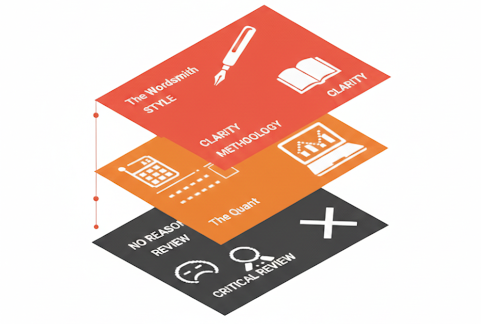
One of her most creative applications is the "Virtual Study Section." This involves a group of AI personalities designed to stress test grant proposals before they are submitted.
- The Veteran: A grumpy reviewer who looks for any reason to say no.
- The Quant: A reviewer who nitpicks methodology and power calculations.
- The Wordsmith: A personality that focuses strictly on style and clarity.
This gamified experience allows faculty to receive meaningful feedback in a safe environment. It ensures that by the time a grant reaches a real reviewer, the arguments are already ironclad.
Final Thoughts: Reclaiming the Mission

By automating repetitive work, Aimee reclaimed ten hours of her work week. That time was not used to do less work but to innovate and support faculty at a higher level. The lesson for research offices is clear. You do not need a massive budget or a specialized IT department to start. You need a domain expert who is tired of the status quo. AI does not replace your judgment, but it certainly amplifies your capacity to do the work that actually matters.
Using Atom's AI System to Streamline Funding Discovery
While individual workflows are a powerful state, institutional success requires a scalable system. Many offices face the same recurring pain points:
- Manual searching: Spending hours sifting through messy government databases.
- Outdated spreadsheets: Managing opportunity lists that are irrelevant by the time they reach faculty.
- Administrative burnout: Researchers spending more time seeking money than doing science.
If you are struggling with these bottlenecks, take a look at our case studies to see how peer institutions use Atom Grants to move from manual coordination to automated, high-impact research development. To see how our platform can modernize your specific office, book a demo with our team today. To learn more about these specific AI workflows and tools, visit aimeeoke.ai or get in touch with her team.
About Aimee
Associate Director of Research Programs, Colorado State University. Aimee is a research administrator with 21 years of experience in the College of Veterinary Medicine and Biomedical Sciences. She has contributed to over 35 NIH training grant proposals and currently oversees programs supporting more than 60 trainees annually. Unlike a typical tech evangelist, she views AI through the lens of a domain expert who knows which tasks eat your time and which shortcuts hold up under audit. After having her own "three sleepless nights" moment with AI in late 2024, Aimee committed to becoming fluent in the technology. She now spends six to eight hours a week studying the latest developments from major labs and the SmarterX AI Mastery Academy. She built aimeeoke.ai to provide the roadmap she wished she had starting out: open access frameworks and practical starting points for research administrators ready to get started.
About the Author
Raphaël Bernier
Head of Growth, Atom Grants
Helping universities modernize research development with AI to reduce admin burden, increase faculty engagement, and improve proposal success.
LinkedIn: https://www.linkedin.com/in/raph-bernier/
Contact: raphael@atomgrants.com
Location: New York
More Blog Posts
The 10 Best Grant Databases for 2026
For universities, researchers, and nonprofits
Read post
Welcome to the team!
Meet our VP of Academics and Senior Software Engineer
Read post
SRAI Annual Meeting 2026
Leading Research Development in the Age of AI Panel
Read post
Introducing Admin Analytics
The numbers we bring to your check-ins, now in Atom whenever you need them.
Read post
NIH AI Policy: New Rules of AI in Proposal Development
Inside the 2026 NIH policies reshaping how researchers write grants and proposals.
Read post
Budgets, in Atom
A workspace for the whole budget: the spreadsheet, the justification Atom AI can write for you, and the funder rules that grade both.
Read post
Atom AI Reviewer
A funder-grade read of your whole proposal, before anyone else sees the draft.
Read post