July 22, 2026
How Denver Health Increased Grant Engagement by 800% After Switching to Atom
Overview
Denver Health, one of the nation's largest safety-net health systems, had an expensive grant discovery tool its researchers had quietly stopped using, with only 13 active investigators across a research community. After switching to Atom, close to a thousand researchers are now set up on the platform, grant email clicks have risen 800%, and the number of opportunities researchers view has quadrupled, with foundation funding surfacing alongside the usual federal grants.
The Challenge
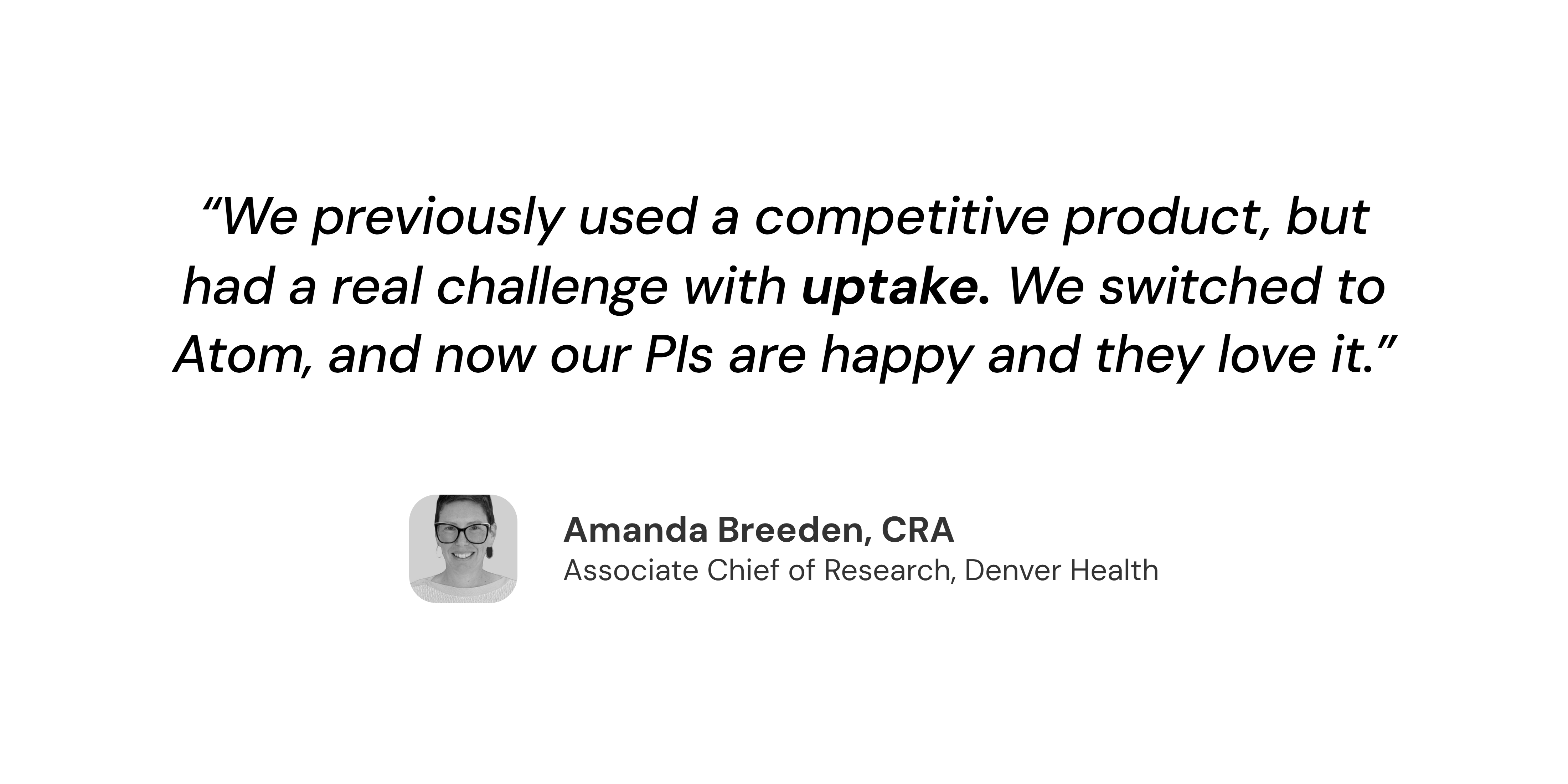
As Amanda Breeden, CRA, Associate Chief of Research, explains:
Denver Health faced several key obstacles:
- A keyword discovery tool that surfaced non-applicable opportunities
- Only about 13 investigators active on the old system
- Frustration and low buy-in across research teams
- Forecasted grants that meant constantly re-checking agency sites
- Manual searching that leaned on federal funding or returned irrelevant results
Why Atom?
With no dedicated research-development department, the team needed a platform that would earn adoption on its own. The decision came down to three things.
1. Intuitive User Experience
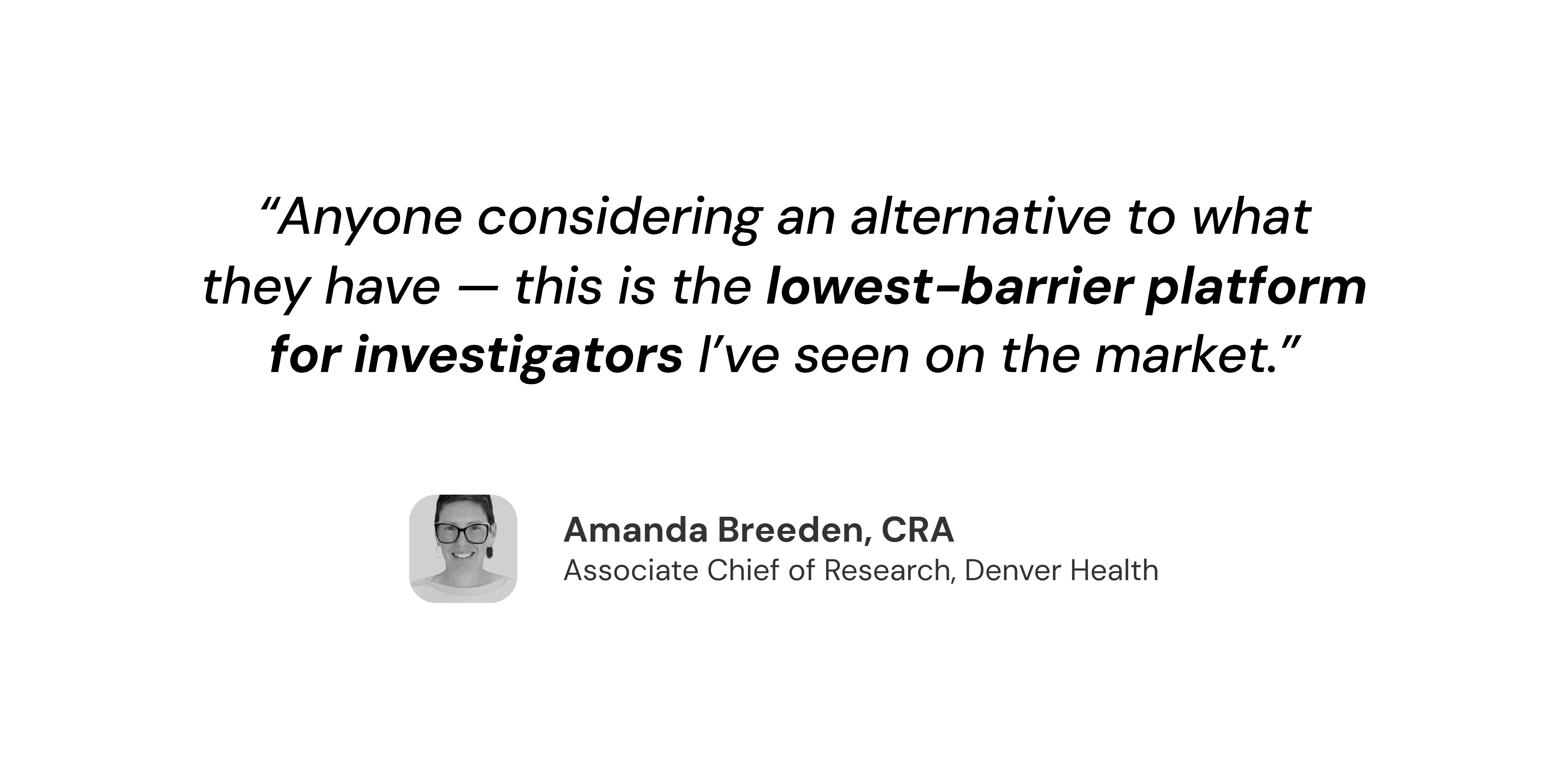
The platform's low barrier to entry was decisive. Researchers could be enrolled and productive in seconds, and the weekly email did the work of getting them back in.
2. Personalized, Research-First Discovery
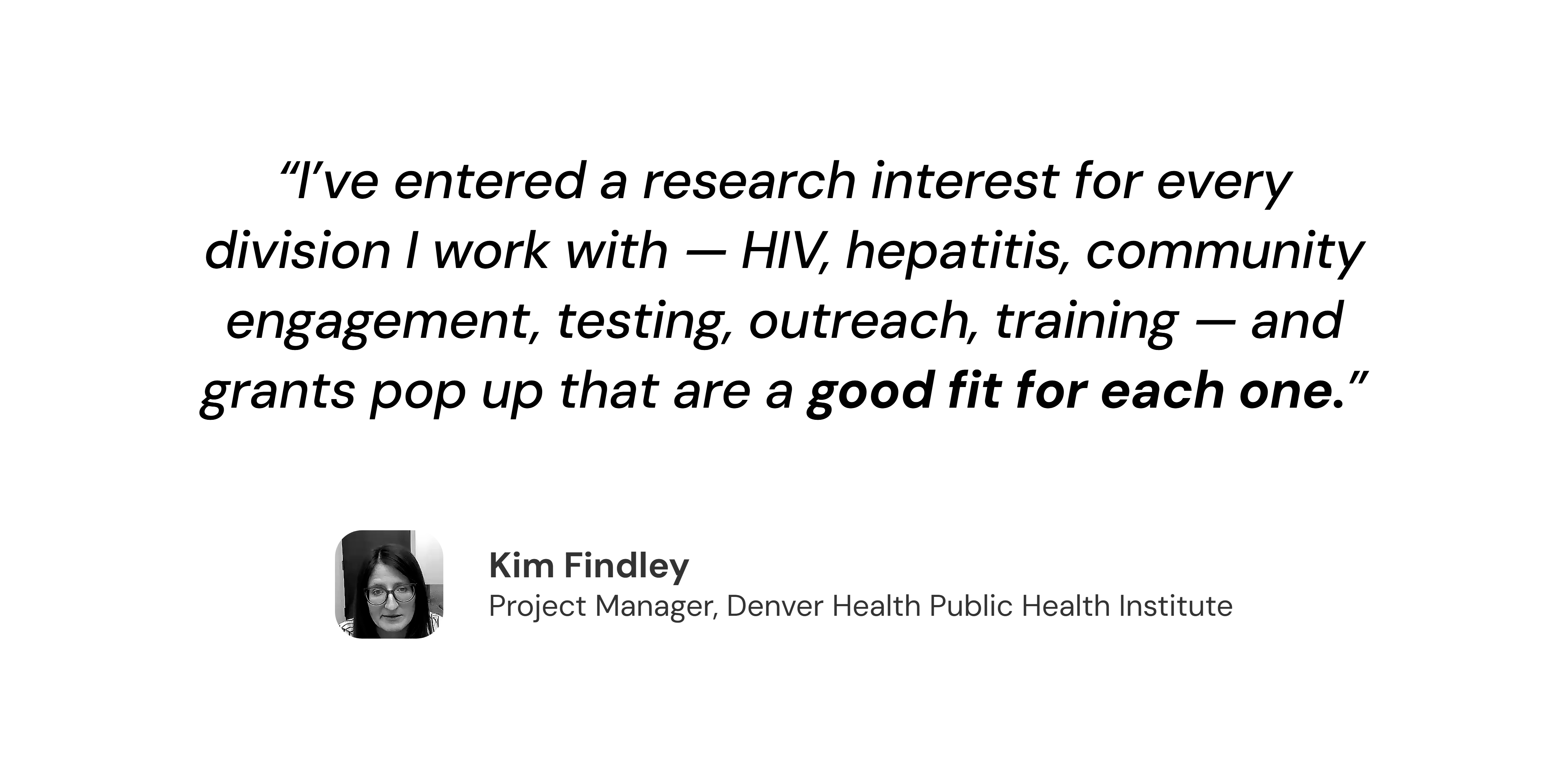
Instead of a portal to search, each researcher gets a weekly readout matched to their interests, set per division, so clinical care, community engagement, and systems-change work all get surfaced, not just traditional research.
3. Forecast Tracking That Never Misses a Deadline
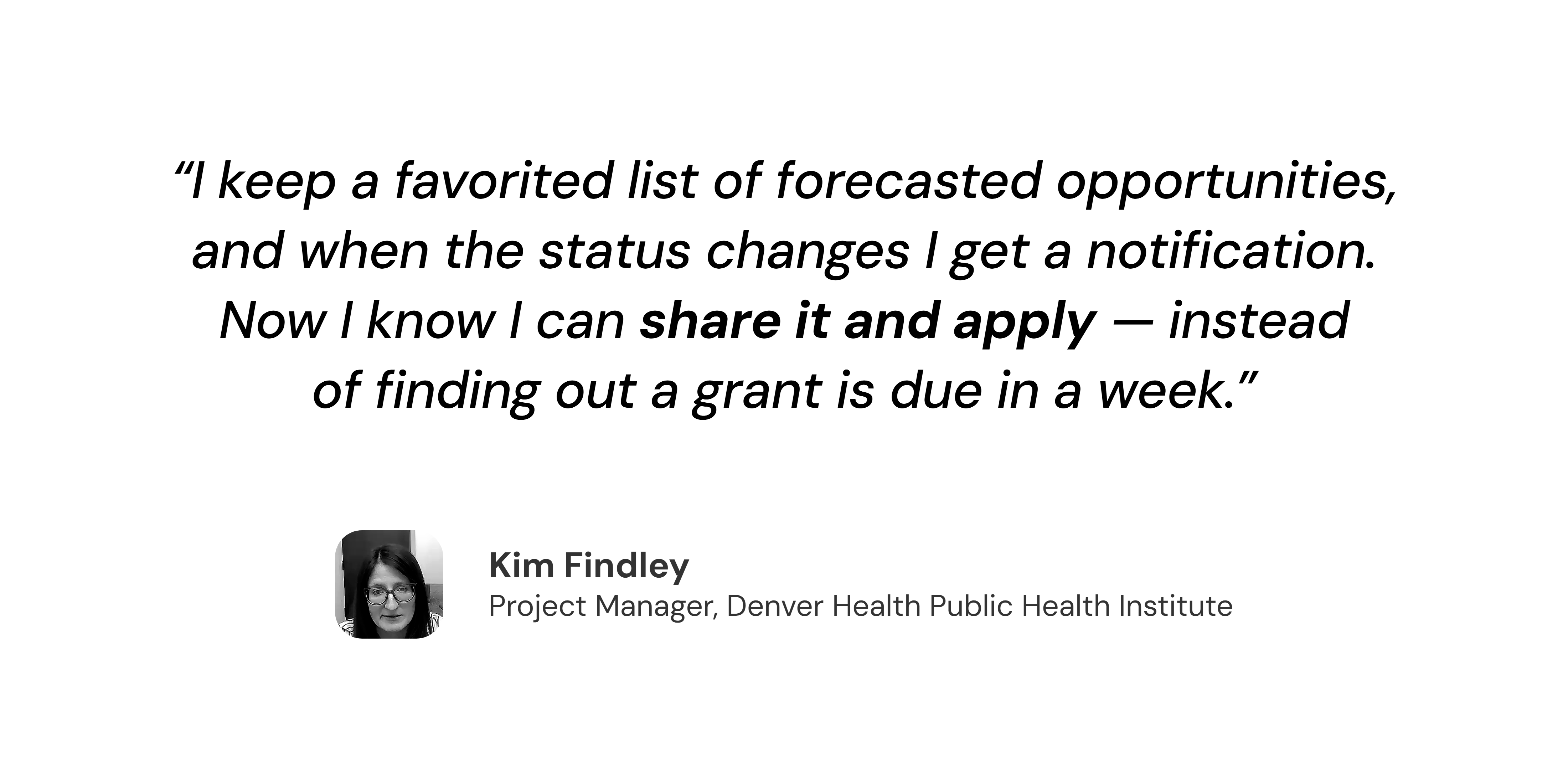
Many opportunities are forecasted long before the real solicitation drops. Atom watches the calendar so the team doesn't have to, flagging the moment a favorited grant changes status
Proposal Development
Discovery is only half of how Denver Health uses Atom. Once an opportunity is in front of a researcher, Sarah Haley's team of six grant analysts has to turn it into a submission — and that is where the platform has changed the work. For a lean team supporting a large research community, Atom handles the groundwork so analysts can spend their attention on quality.
Checklists That Catch Every Sponsor Requirement
Every sponsor has its own requirements, and a single missed detail can sink an otherwise strong application. The team uses Atom to build checklists straight from the solicitation and to answer questions against it, so nothing slips between the opportunity and the submission.
Templates and Budget Justifications
The platform also gives analysts a running start on the documents researchers dread most. Instead of drafting from a blank page, the team can produce a first version shaped by what the sponsor is actually asking for, then hand it to the researcher to refine.
Implementation Process
Denver Health's research community leans cautious about new tools, so the team took a measured approach:
-
Pilot first: Amanda used herself as the guinea pig and applied for two grants through the platform
-
Gradual rollout: two to three months to fully implement across a change-cautious community
-
Back-end onboarding: researchers added in 30 seconds, turning a hallway conversation into an active user Value showed up well before full adoption. Once seasoned investigators realized the weekly email was not spam but something they could actually act on, they dug in within the first two to three weeks
Results and Impact
Dramatic Increase in Engagement
Because the matches land close to each person's real interests, the once-ignored weekly email became something researchers open and act on.
- From 13 to nearly 1,000 researchers set up on the platform
- 800% increase in grant email clicks, nearly 400 in April alone
- 4× increase in the number of grant opportunities researchers view
- More questions asked directly in the platform — a behavior that didn't exist before
Funding Beyond the Federal Government
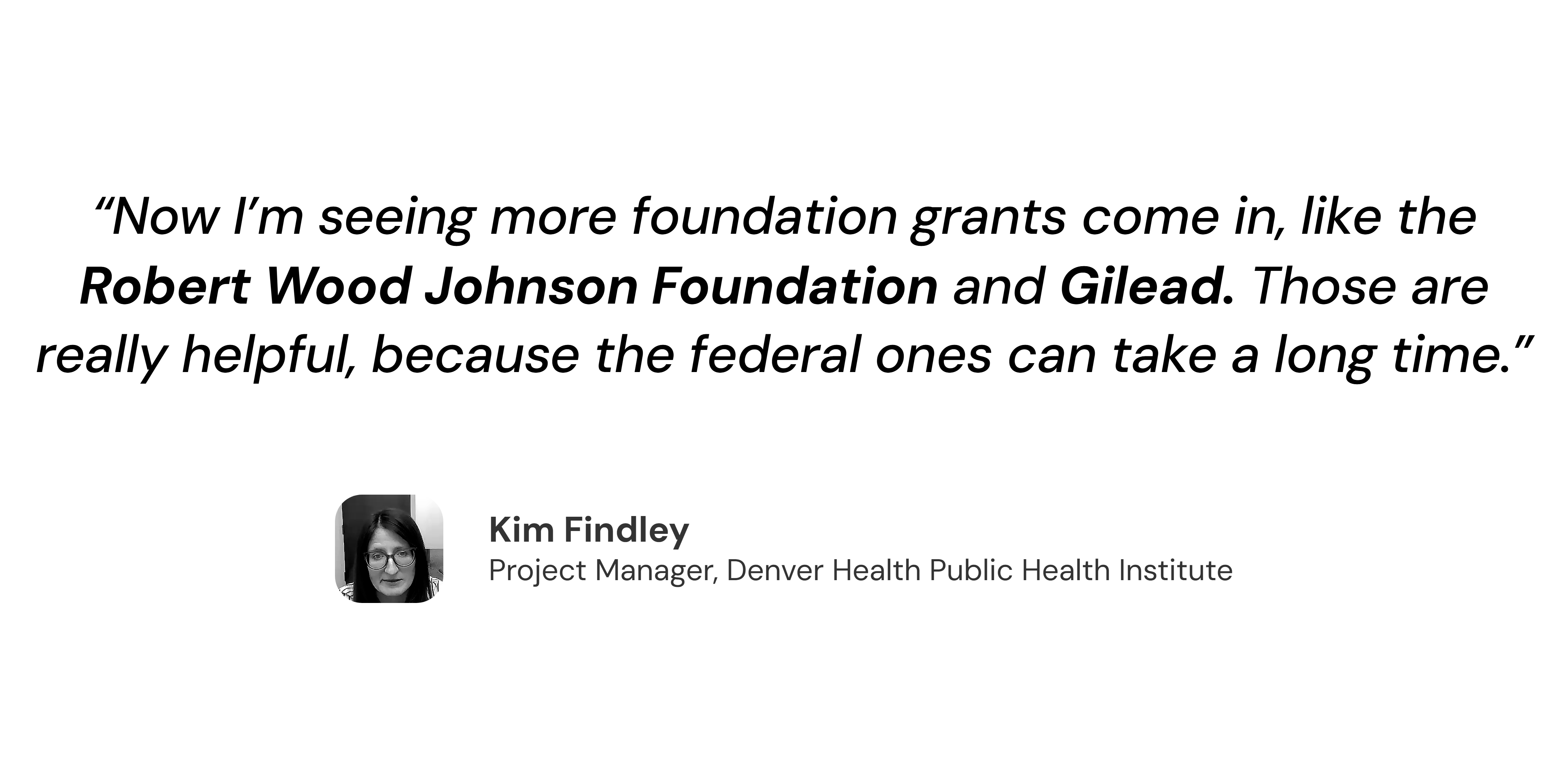
Early on, nearly every recommendation was federal and forecasted, with long turnarounds. Over time, more foundation funding has surfaced, which is something a public-health team can't always wait on a federal cycle to get.
What It Changed Day to Day
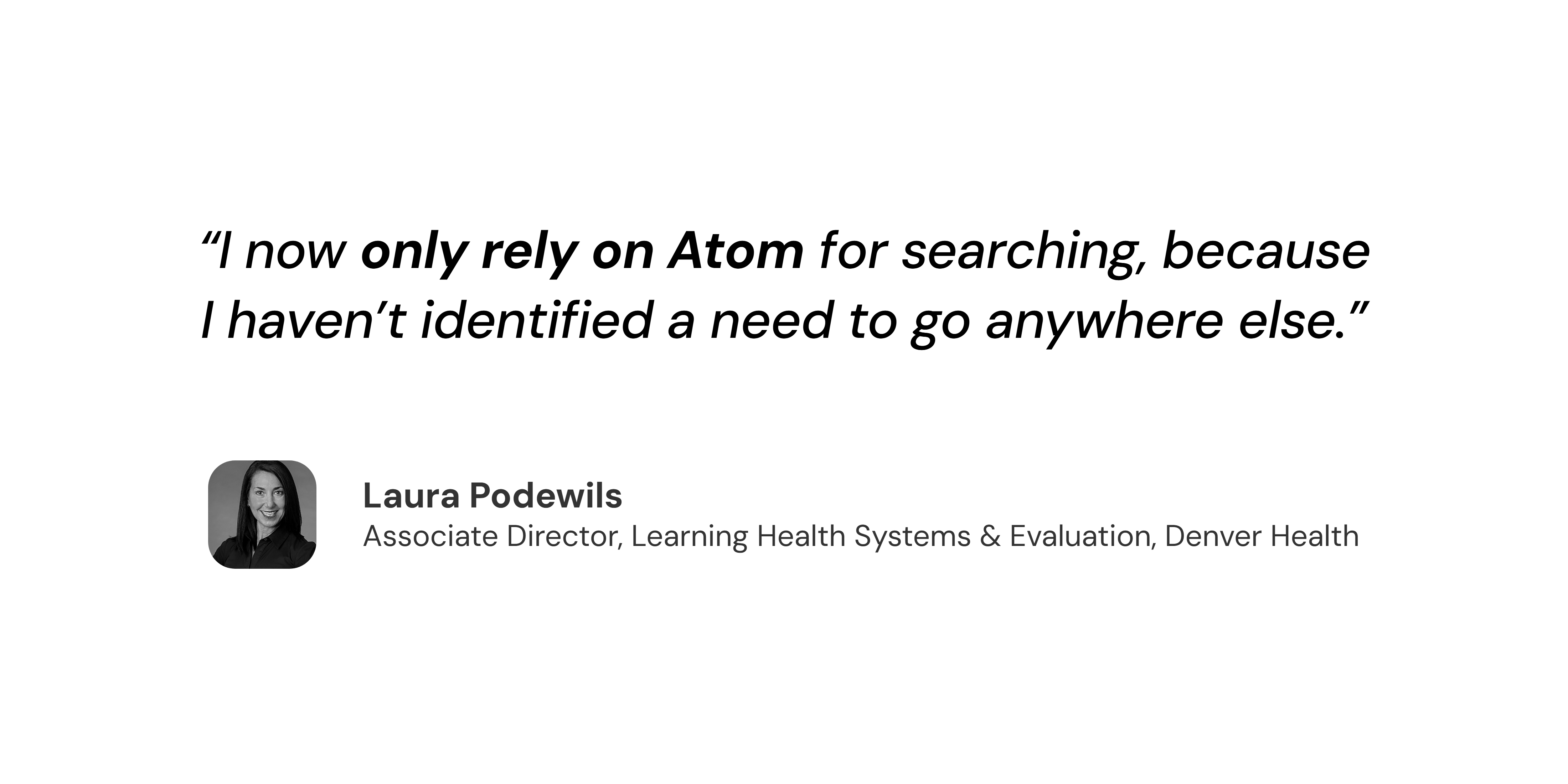
For the people doing the searching, Atom quietly became the only place they look. The comprehensiveness of the matches removed the reflex to double-check three other sources.
Advice for Other Institutions
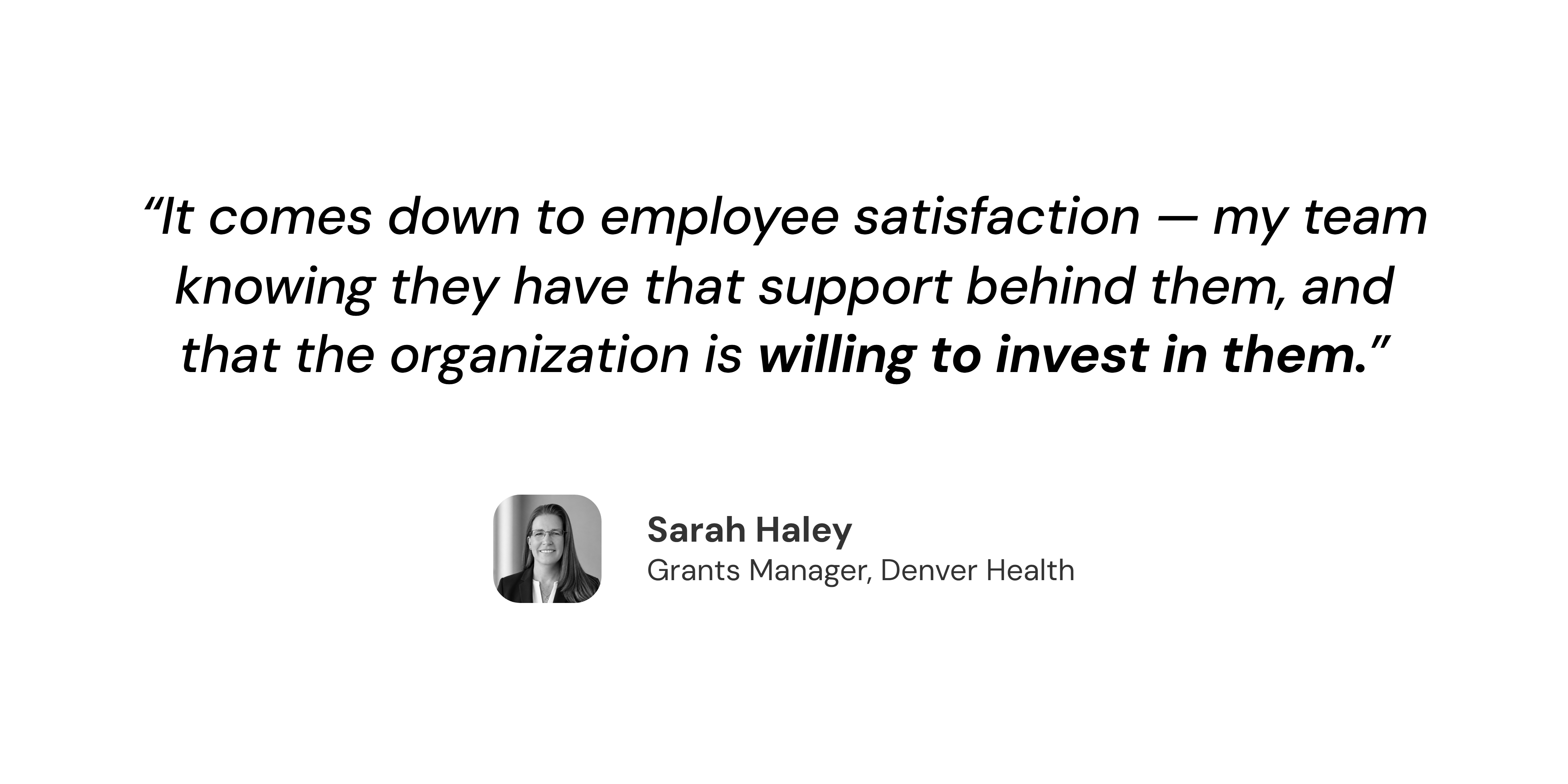
Asked what they'd tell a peer evaluating Atom or standing up grant discovery for the first time, the team kept returning to what it does for the people behind the work.
Key Success Factors
Denver Health's turnaround with Atom can be attributed to several factors:
- Relevance that earns the click: matches close enough to real interests to rebuild trust
- Personalized delivery: a weekly inbox digest instead of a portal and a listserv blast
- Frictionless onboarding: researchers added on the back end in seconds
- Forecast tracking: status alerts that remove the risk of a missed deadline
- Mission fit: interests set per division, from clinical care to community engagement
Looking Forward
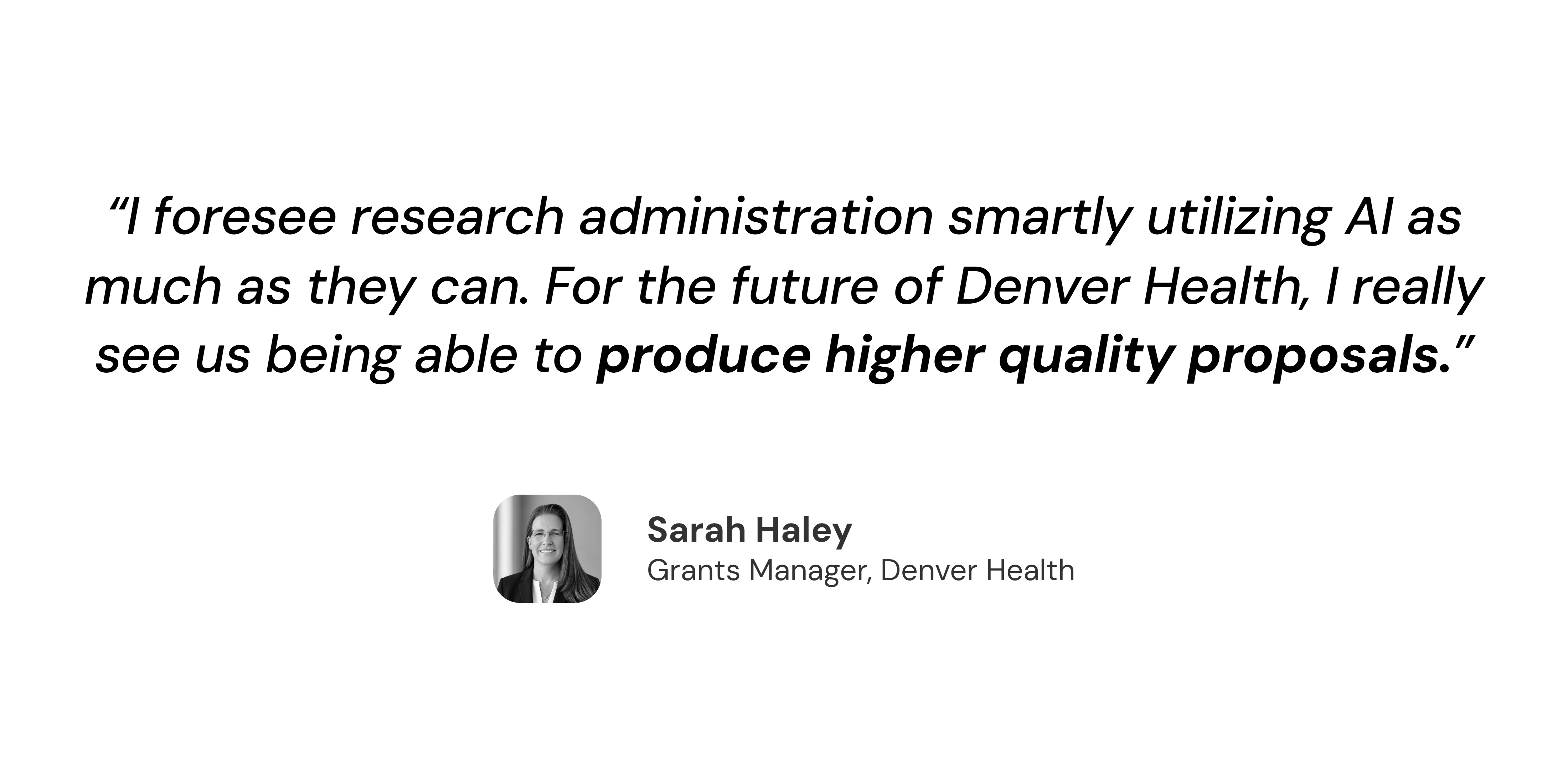
Denver Health continues to expand Atom across its Office of Research and Public Health Institute, from individual funding strategy to institutional planning. With adoption now the norm rather than the exception, the platform has become the default first stop for finding funding across the system — and an increasingly central part of how proposals get built.
About Denver Health
Denver Health is one of the nation's largest and most comprehensive safety-net health systems, serving the Denver community since 1860. Its research enterprise spans a central Office of Research and a Public Health Institute, together supporting hundreds of investigators and public-health programs — without a dedicated research-development department.
About the Interviewees
Amanda Breeden, CRA serves as Associate Chief of Research at Denver Health, where she has spent 13 years. She led the move off the system's previous discovery tool and tracks the engagement metrics behind the rollout.
Sarah Haley is Grants Manager at Denver Health, leading a team of six grant analysts who use Atom day to day.
Kim Findley is a Project Manager with Denver Health's Public Health Institute, managing funding discovery across divisions from clinical care to community engagement and systems change.
Laura Podewils is Associate Director of Learning Health Systems & Evaluation at Denver Health, and now relies on Atom as her single source for finding funding.
Ready to transform your institution's research development? Schedule a demo to see how Atom can help your faculty discover and win more funding opportunities.
More Customer Stories

How BrainWaves Tripled Grant Output with Atom Grants
Read story
How the University of Arkansas at Little Rock Empowers Faculty with Atom Grants
Natural language grant search helped reduce pre-award workload.
Read story
Efficient Grant Discovery for PUIs: Franklin & Marshall’s Atom Story
Adopted Atom to enable faster opportunity identification, stronger faculty engagement, and scalable support.
Read story
How USF is Scaling Research to $1bn with Atom Grants
Found relevant funding sooner, with smooth implementation and measurable engagement gains across a growing research institution.
Read story
How Memphis Set Records for Grant Submissions with Atom Grants
Increased faculty engagement tenfold and drove record submissions at a newly designated R1 university.
Read story
How NDSU Transformed Grant Discovery with Atom Grants
Helped faculty identify new opportunities in a shifting funding landscape.
Read story