Meet the 2026 Atom Expert Advisory Board
Five institutional leaders shaping the future of research development
May 21, 2026
A year into running an Expert Advisory Board, one lesson stands out: the best product feedback rarely comes from a roadmap meeting. It comes from people who do the work, in real offices, with real deadlines, who tell us when something we built actually helps and when it gets in the way.
For 2026, we are expanding the board with a group that reflects where research development is headed. There are customers pushing the limits of what AI can do in their own institutions. There are researchers studying how higher ed is responding to generative AI in the first place. There are leaders who run the convenings where this profession comes together. And there is continuity from our founding cohort, so we keep institutional memory as we grow.
Here is who is joining the board, and why each of them matters to the work we are doing.
The 2026 cohort
Robert Kearns, NYU Langone Health
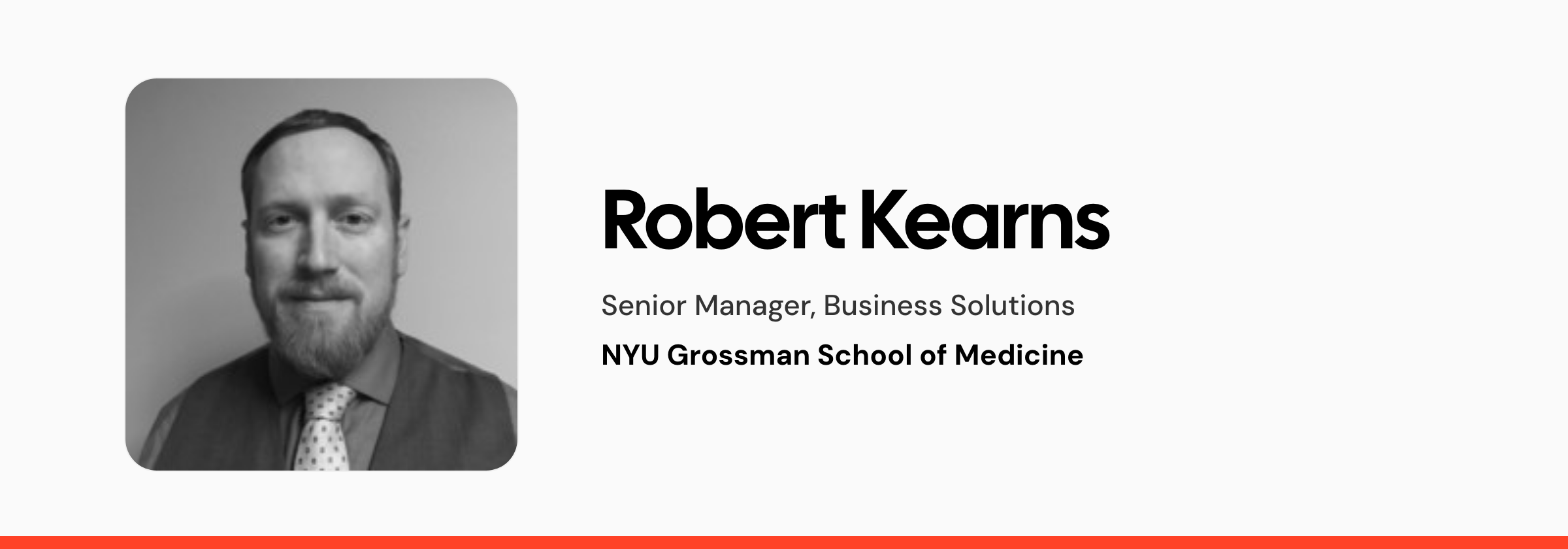
Robert is one of our most engaged customers, and one of the people most actively redrawing what a research development office can do with AI. At NYU Langone Health, his team is not waiting for vendors to define what is possible. They are prototyping, asking hard questions about NIH guidance on AI-generated content, and pushing Atom to deliver real capabilities around researcher search, collaborator matching, and AI-assisted proposal development. He has a sharp eye for the difference between a tool that demos well and a tool that survives contact with a real grants office. That perspective is invaluable when we are deciding what to build next.
Dylan Ruediger, Ithaka S+R
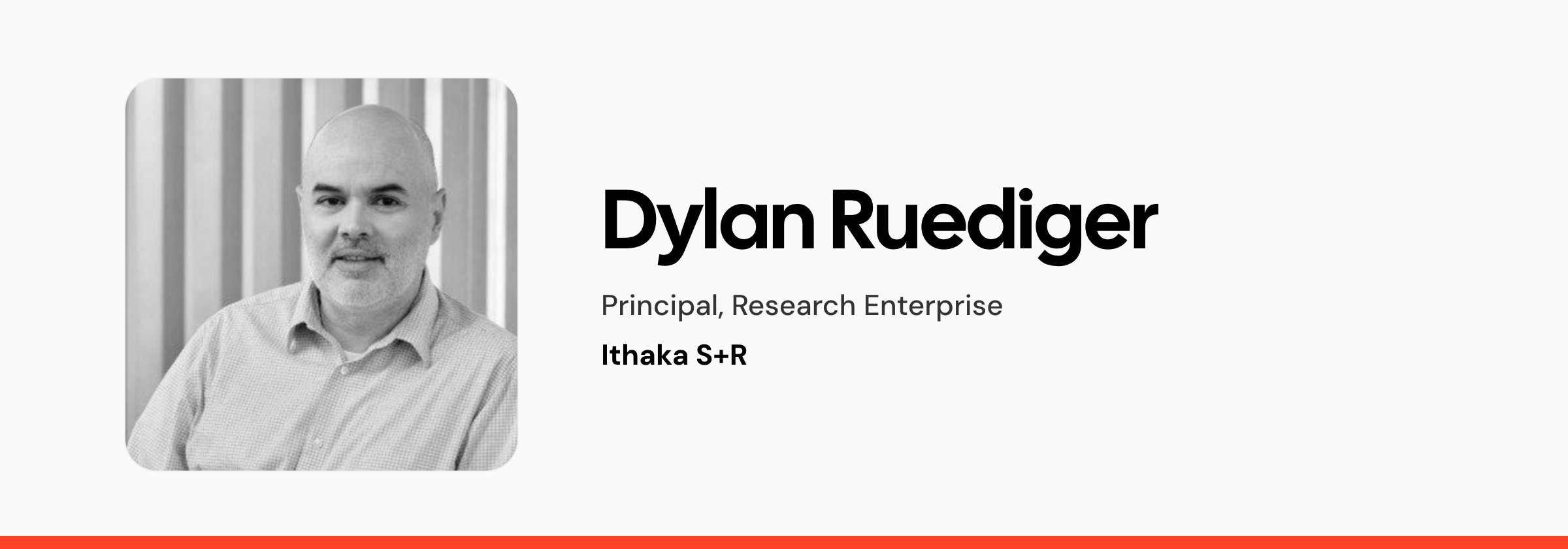
Dylan is principal for the research enterprise at Ithaka S+R, where he leads work helping universities, funders, and policymakers respond to the technological and political shifts reshaping scholarship. His team is collaborating with over 60 universities on projects about how generative AI is being adopted across teaching, learning, and research, and maintains one of the most-referenced product trackers for AI tools in higher ed. Dylan brings something Atom needs more of: rigorous, evidence-based perspective on how this technology is actually landing on campuses, rather than how vendors say it is.
Melanie Bauer, Nova Southeastern University
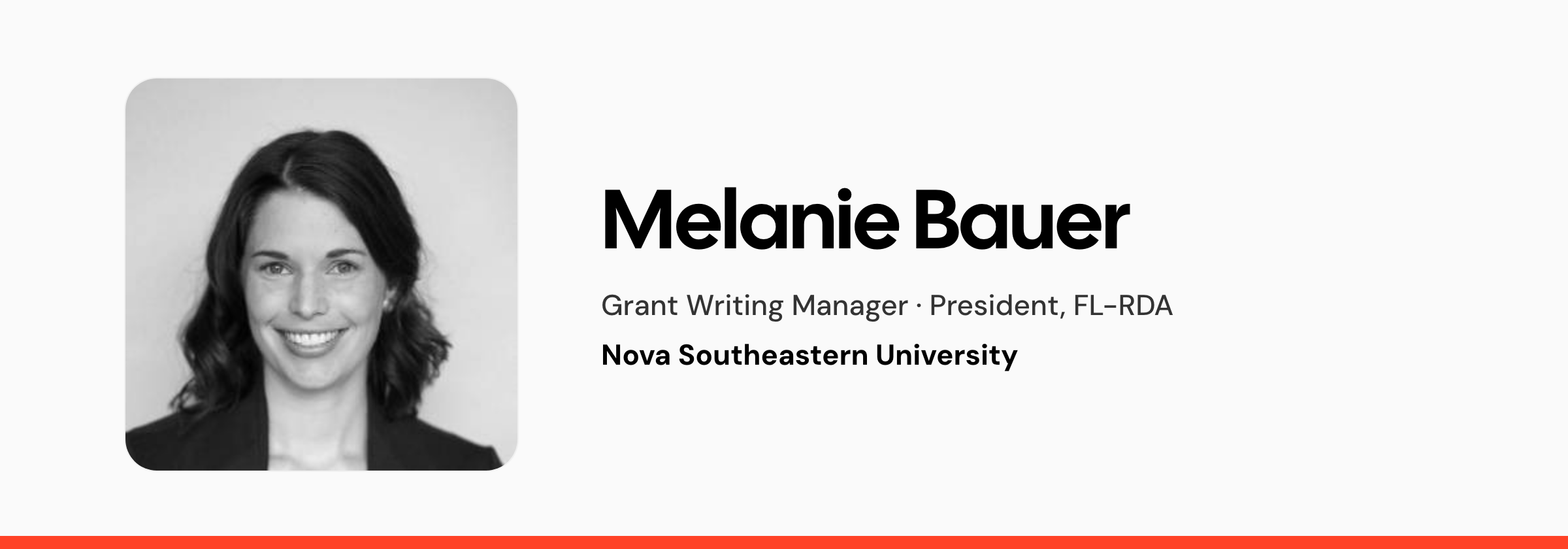
Melanie is Grant Writing Manager at Nova Southeastern University and President of the Florida Research Development Alliance (FL-RDA), where she runs the annual statewide convening for RD professionals. She is also PI on two active NSF awards focused on team science and statewide research collaboration, and her work bridges the practitioner perspective with serious scholarship on how to actually make interdisciplinary teams work. If you have ever sat in a room of RD professionals in Florida recently, chances are Melanie helped get them there. She brings deep insight into how research development functions across very different institutional types and how a tool like Atom needs to flex to support them.
David Butler, Middle Tennessee State University
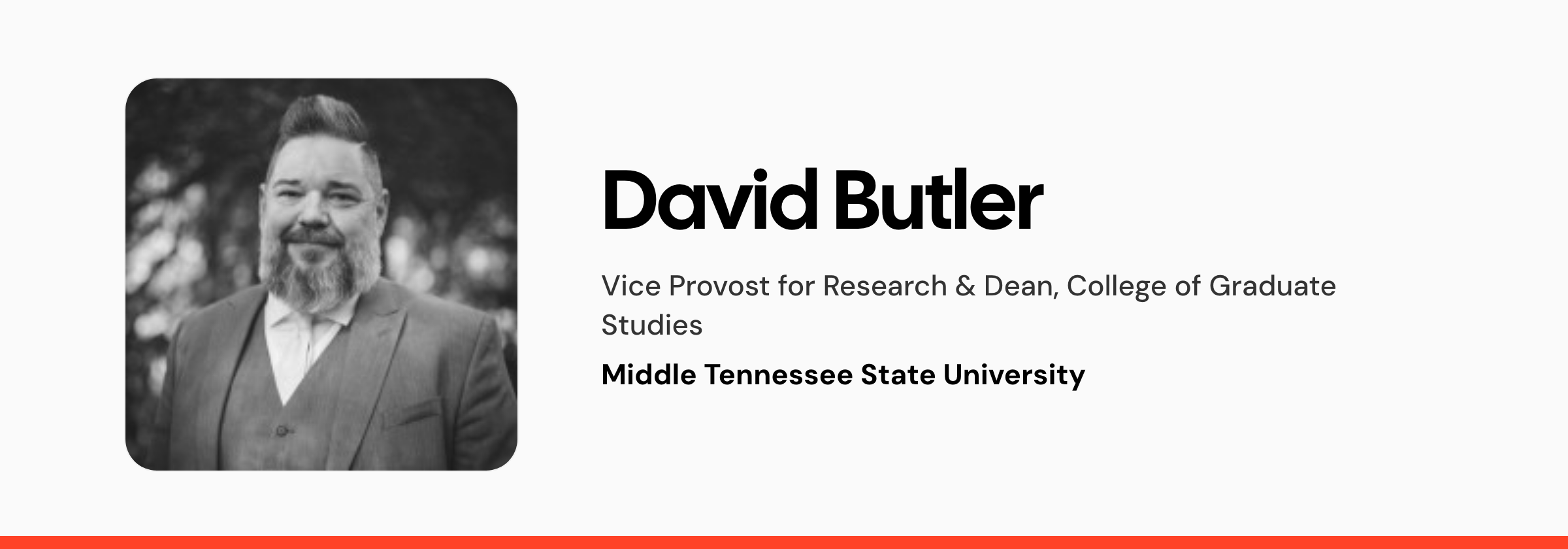
David is Vice Provost for Research and Dean of the College of Graduate Studies at MTSU, where he led the institution's elevation to R2 "high research activity" status and grew research expenditures by more than 30% in his first two years. He launched the MTSU Research Foundation and has championed everything from quantum science partnerships with Oak Ridge National Laboratory to applied AI work across the university. David is a longtime Atom customer who sees this work from the top of the org chart, where research strategy meets graduate education meets institutional growth. His view from the VP suite is a useful counterweight to the day-to-day operational perspective we hear from most of our users.
Brian Evans, University of Memphis (Board Secretary)
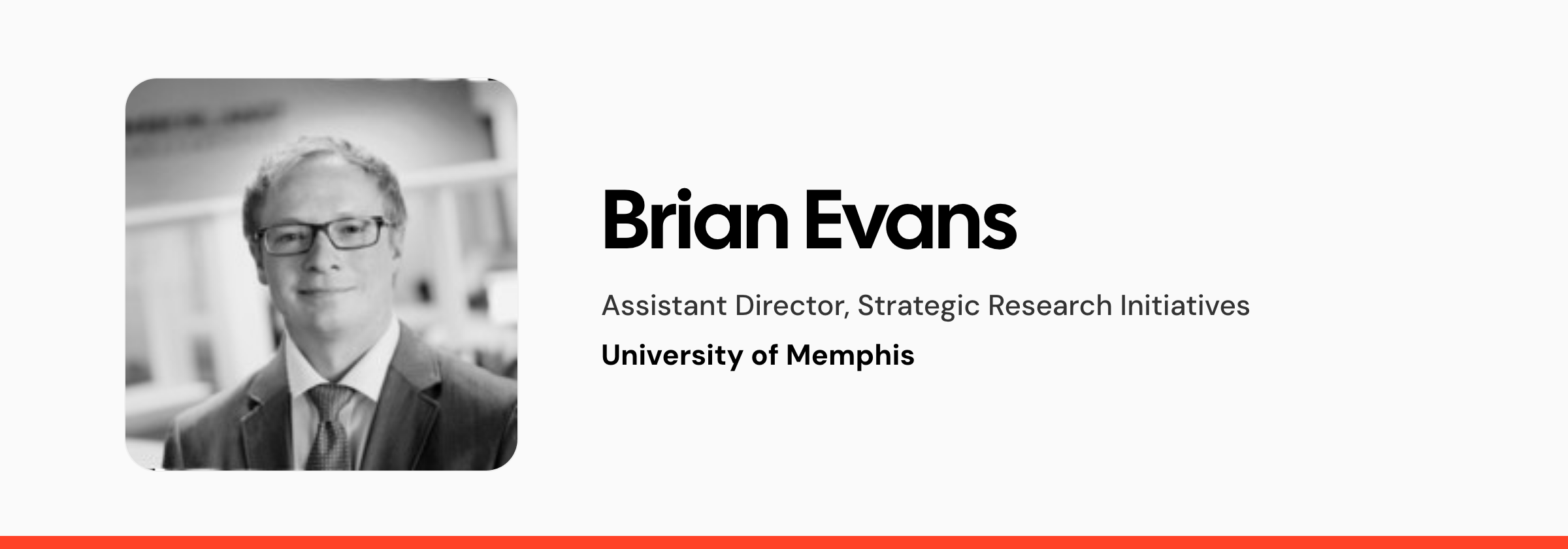
Brian is Assistant Director of Strategic Research Initiatives at the University of Memphis, a founding member of our advisory board, and he is continuing into 2026 as Secretary so we keep institutional continuity as the board evolves. Brian's background spans biomedical engineering research at Vanderbilt, biotech, and now strategic research leadership at a growing R1 institution. Brian's combination of scientific rigor, operational experience, and willingness to say the uncomfortable thing has shaped this board from day one. We are grateful to have him stay on.
Why this matters
Atom is built for research development professionals, but the field itself is in motion. Funding environments are tightening. AI is changing what proposal development looks like. Institutions are asking harder questions about ROI, about who their RD offices actually serve, and about what gets built in-house versus bought.
A serious advisory board is one of the few mechanisms that keeps us honest in that environment. These five members will help us pressure-test our product roadmap, our research, our positioning, and the assumptions we are quietly making about what good looks like. They will not always agree with us, and that is the point.
We will be sharing more of the board's work publicly over the coming months, including the strategic questions we are wrestling with, the practitioner research coming out of it, and the product directions it is shaping. If you are an RD leader who wants to be part of that conversation, get in touch.
More Blog Posts
The 10 Best Grant Databases for 2026
For universities, researchers, and nonprofits
Read post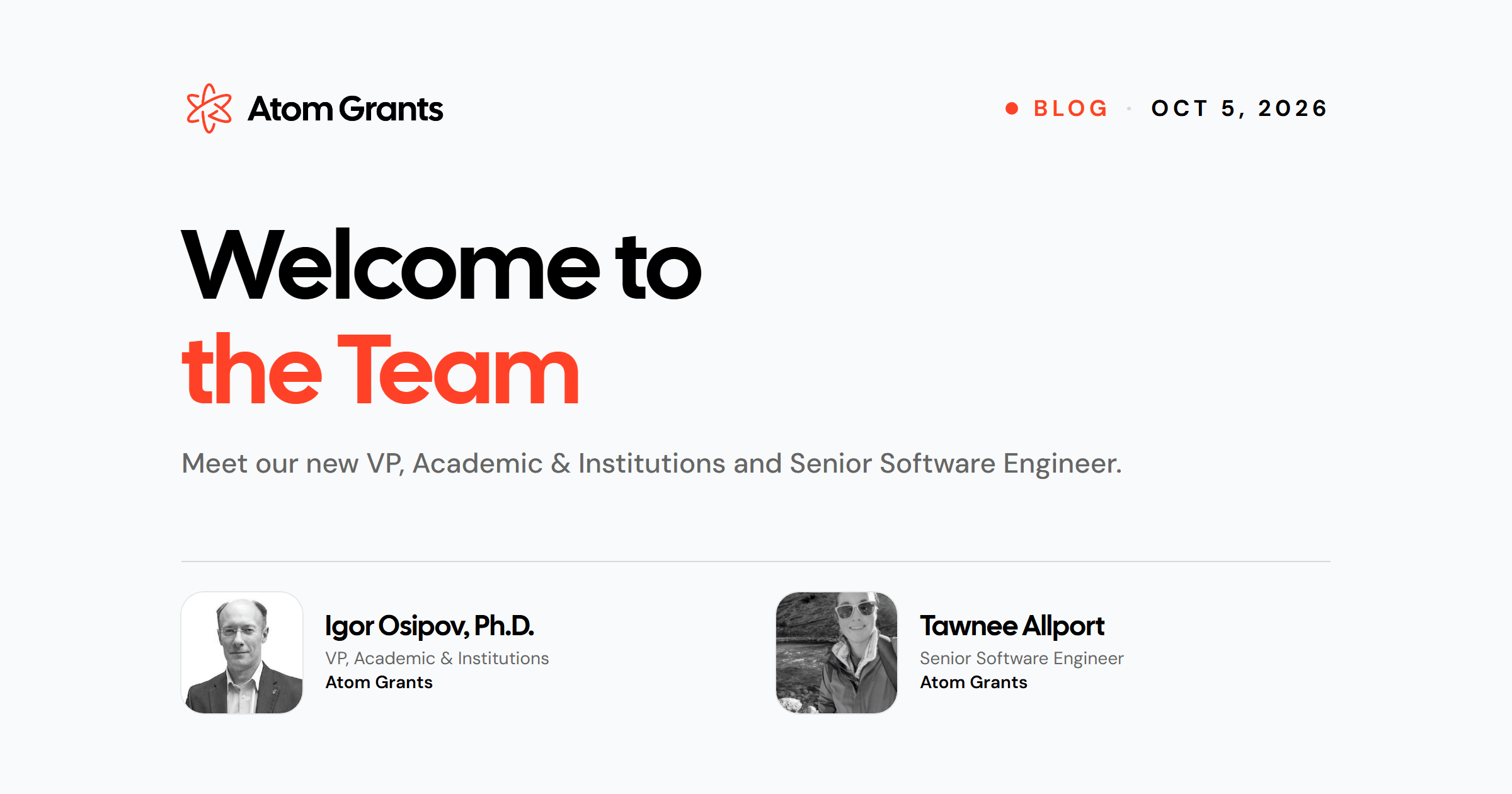
Welcome to the team!
Meet our VP of Academics and Senior Software Engineer
Read post
SRAI Annual Meeting 2026
Leading Research Development in the Age of AI Panel
Read post
Introducing Admin Analytics
The numbers we bring to your check-ins, now in Atom whenever you need them.
Read post
NIH AI Policy: New Rules of AI in Proposal Development
Inside the 2026 NIH policies reshaping how researchers write grants and proposals.
Read post
Budgets, in Atom
A workspace for the whole budget: the spreadsheet, the justification Atom AI can write for you, and the funder rules that grade both.
Read post
Atom AI Reviewer
A funder-grade read of your whole proposal, before anyone else sees the draft.
Read post