AI as the New Instrument of Science
Insights from NCURA
June 23, 2026
At the recent NCURA (National Council of University Research Administrators) conference, Tomer, co-founder of Atom Grants, and Kim from Denver Health (DHHA), took the stage to discuss the transformative role of AI in research and research administration.
Far from a dystopian narrative about automation replacing jobs, their message was clear and optimistic: AI is the next great scientific instrument, an extension of the human mind much like the telescope or microscope were extensions of our vision.
Here is a recap of their insightful session on how the research community is adapting to AI as a new creative partner.
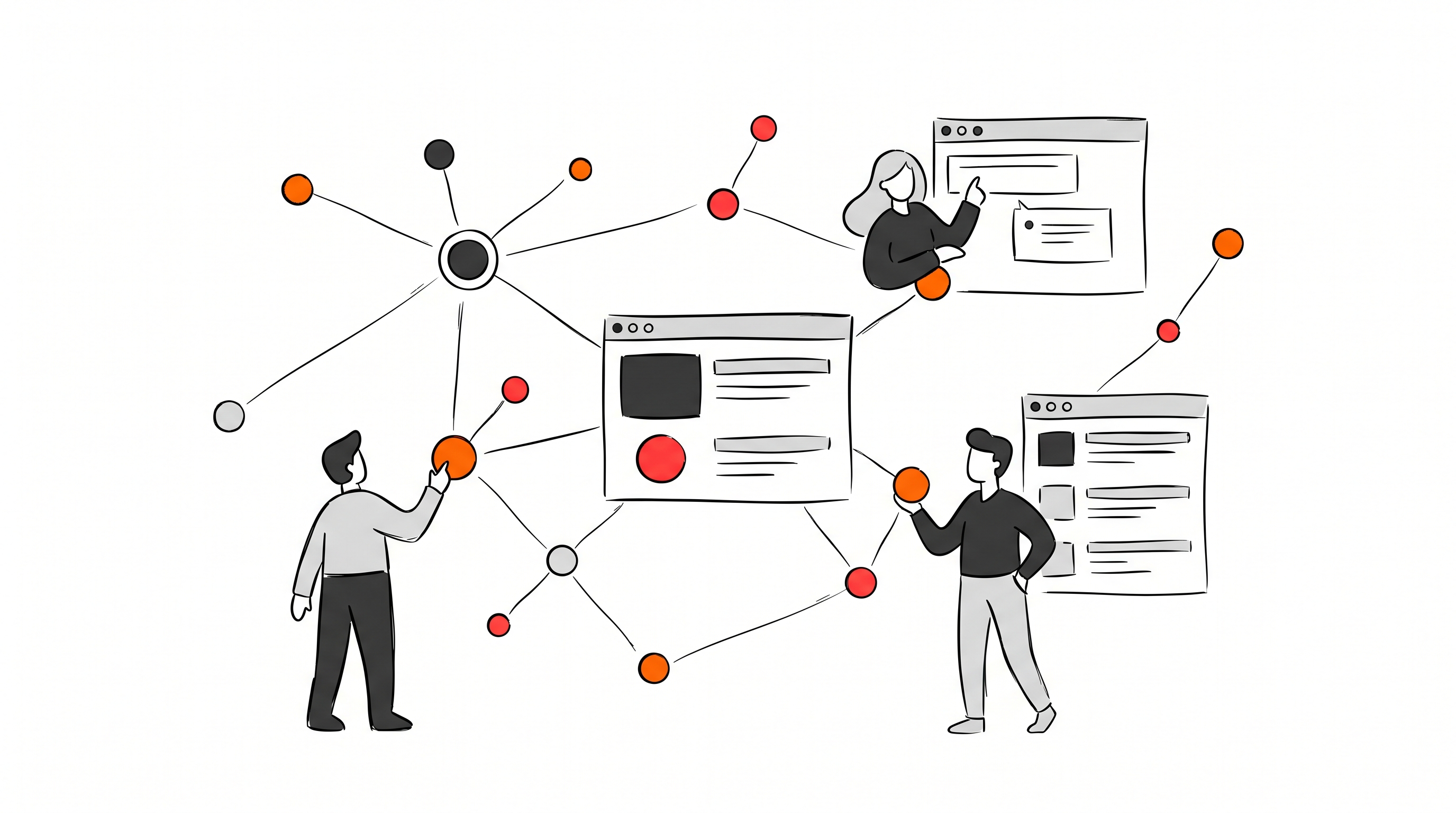
The Evolution of Scientific Instruments
Tom kicked off the session by framing AI's historical context. Scientific revolutions always begin with new tools. While telescopes helped us see further into the cosmos and microscopes revealed the cellular world, AI gives us a "sixth sense" for pattern recognition and prediction.
We can already witness this in groundbreaking discoveries:
- Gravitational Waves: In 2015, machine learning models trained on terabytes of simulated data helped the LIGO observatory detect the impossibly faint signals of two black holes colliding 1.3 billion years ago.
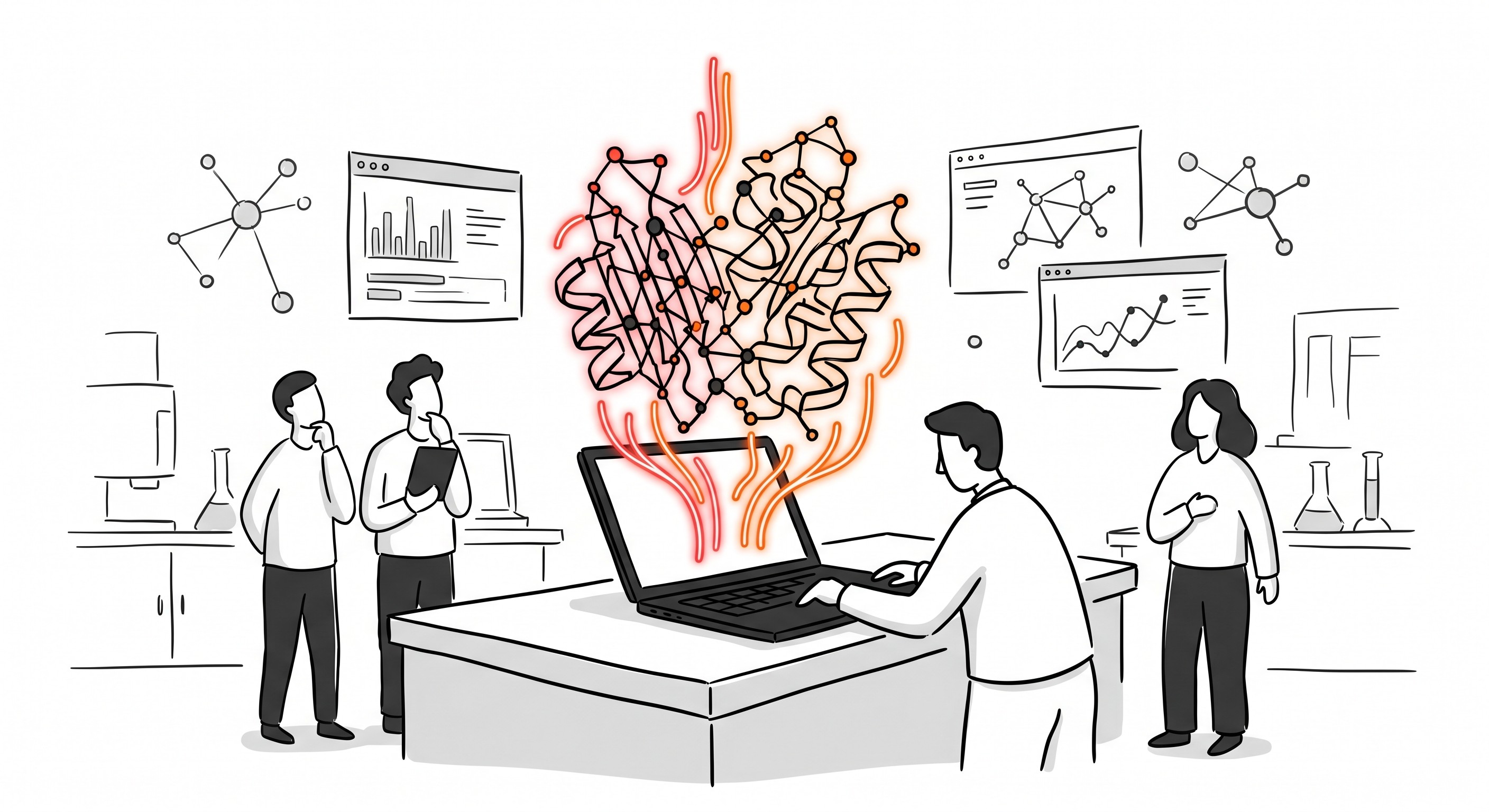
- AlphaFold: DeepMind's AI solved a 50-year-old biology problem by predicting the shapes of over 200 million protein folds. This breakthrough, which recently contributed to a Nobel Prize for computer scientists, is estimated to save trillions in experimental costs and has revolutionized drug discovery pipelines.
Semantic Search: Breaking Down Silos
Beyond massive discoveries, AI is changing daily research workflows through semantic search. Traditional keyword searches often return irrelevant results because they lack contextual understanding (e.g., searching for "chemistry" returns everything from physical to biological chemistry).
Semantic search uses Large Language Models (LLMs) to convert language into multi-dimensional vectors based on underlying meaning. This allows tools like ATOM Grants, Semantic Scholar, and Rabbit to act as creative partners, connecting researchers with hyper-relevant funding opportunities and interdisciplinary collaborators they might not have found otherwise.
AI is also being used to evaluate research quality intrinsically. Tools like scite are analyzing citations to determine whether they support, refute, or simply mention a paper, bringing vital nuance to institutional rankings and impact factors.
The Research Administrator’s Perspective
Kim shared the practical, on-the-ground realities of implementing AI at Denver Health, a safety-net hospital with limited resources and high case volumes. To help their lean team manage the entire grant lifecycle, DHHA is exploring several AI applications:
- Internal AI Research Concierge: Building a custom, secure ChatGPT trained on institutional guidelines to answer researcher questions 24/7.
- Pre-Award Efficiency: Using ATOM Grants to automate funding discovery, replacing time-consuming manual profile setups in legacy platforms like Pivot.
- Proposal Checklists: Utilizing AI to read dense NOFOs (Notices of Funding Opportunity) and generate compliance checklists and timelines.
- Contract Review: Exploring tools like Fiby to do initial passes on research contracts and redline unacceptable terms.
- On-Demand Training: Using NotebookLM and Synthesia to easily update and distribute training videos for staff and PIs.
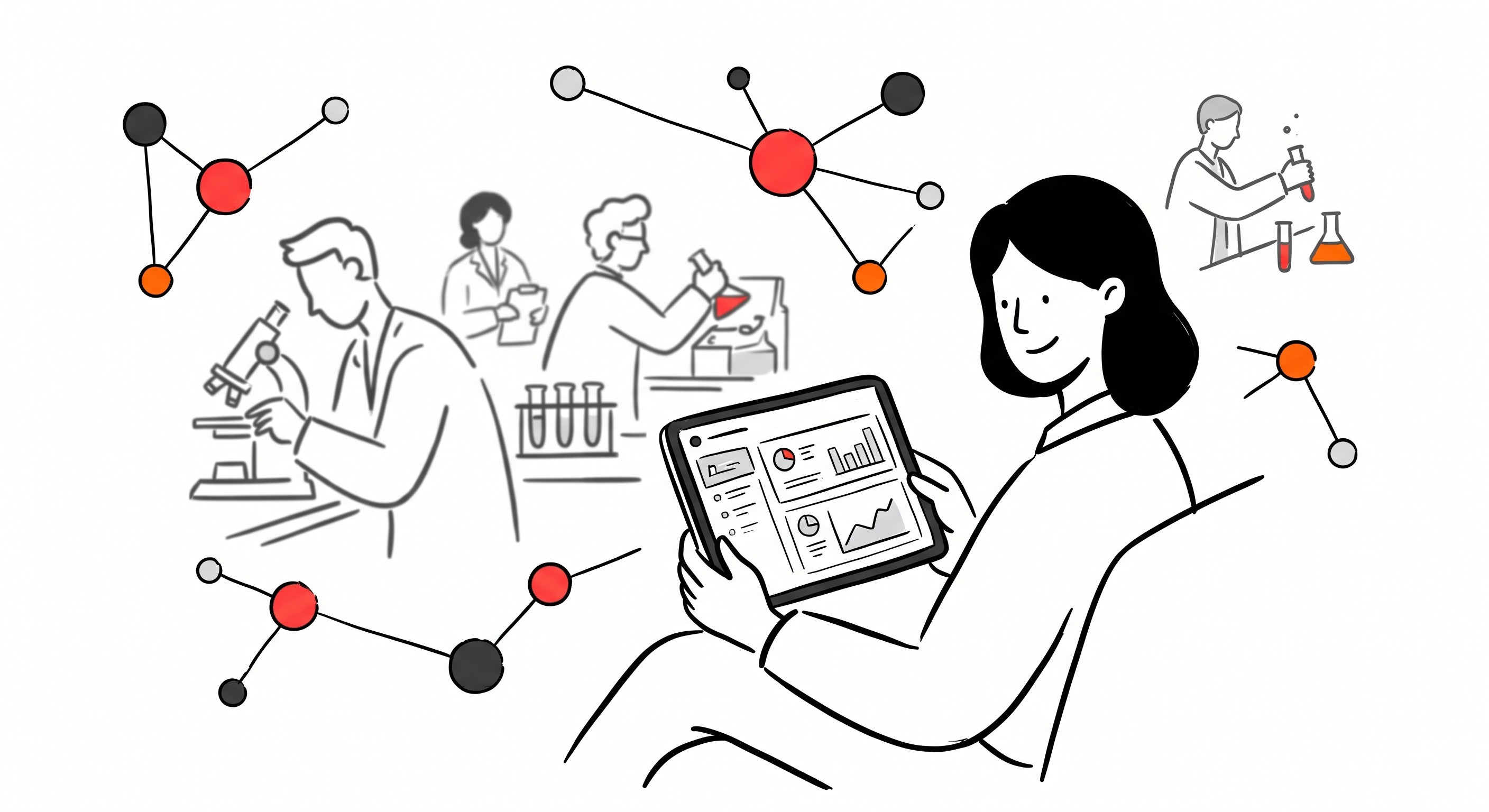
Kim emphasized a crucial point for administrators: AI is not replacing jobs. It’s a tool to streamline tedious tasks—like reading 20-page RFPs just to check eligibility—freeing up staff for more strategic, high-level work.
Navigating the Risks: HIPAA and Hallucinations
In a clinical setting, data security is paramount. Open-source AI isn't always an option due to HIPAA and IP concerns. Institutions need to establish AI governance committees, set strict guardrails, and extensively test internal models to prevent data breaches and mitigate hallucinations (such as an internal AI inventing fake contact emails!).
The golden rule remains: Trust, but verify. AI doesn't understand the nuanced "gray areas" of grant guidelines the way experienced administrators do.
The Future: The Hybrid Scientist
Looking forward, Tom detailed the three archetypes of AI integration in science:
-
The Copilot: Augmenting current work by handling the "grind" (similar to how AI auto-completes code for developers today), allowing researchers to focus on insights.
-
The Oracle: AI that orchestrates its own sub-agents to achieve a broad goal, moving significantly faster than manual execution. [Image Prompt: A sleek, futuristic autonomous laboratory where an advanced robotic arm carefully handles beakers, overseen by a glowing AI holographic interface displaying real-time chemical data feedback.]
-
The Actuator: The "sci-fi" future that is already arriving. Autonomous, closed-loop labs (like those built by Periodic Labs) where AI reasons, proposes experiments, physical robots execute them, and the resulting data feeds back into the model in real time.
Adapting to Sponsor Guidelines
As researchers increasingly turn to ChatGPT to draft proposals, federal sponsors are drawing lines in the sand. For instance, the NIH has restricted the number of applications a PI can submit annually after instances of AI-generated spam, and the NSF mandates that AI can assist but cannot be the primary author of specific aims.
The rule of thumb? If you wouldn't trust a grad student to do it completely unsupervised, don't trust ChatGPT to do it either.
Platforms like ATOM are navigating these rules by using AI not to write the grants, but to extract requirements, generate cheat sheets, and provide automated "red-teaming" for instant proposal feedback.
Conclusion
As Andy Clark noted, “Just as a prosthetic limb can become part of our body, technology can become part of our minds.” AI does not dictate which scientific questions matter—that remains the crucial, creative job of humans. By adopting AI responsibly, the research community is poised to enter one of its most collaborative and productive eras yet.
More Blog Posts
The 10 Best Grant Databases for 2026
For universities, researchers, and nonprofits
Read post
Welcome to the team!
Meet our VP of Academics and Senior Software Engineer
Read post
SRAI Annual Meeting 2026
Leading Research Development in the Age of AI Panel
Read post
Introducing Admin Analytics
The numbers we bring to your check-ins, now in Atom whenever you need them.
Read post
NIH AI Policy: New Rules of AI in Proposal Development
Inside the 2026 NIH policies reshaping how researchers write grants and proposals.
Read post
Budgets, in Atom
A workspace for the whole budget: the spreadsheet, the justification Atom AI can write for you, and the funder rules that grade both.
Read post
Atom AI Reviewer
A funder-grade read of your whole proposal, before anyone else sees the draft.
Read post