Environmental Impact of AI on Campus
How to assess energy implications with our new AI Impact Calculator
November 19, 2025
Artificial intelligence has become a core tool in research administration, supporting everything from grant discovery to compliance workflows. As usage grows across campuses, many institutions are starting to ask an important question: What is the environmental impact of everyday AI activity?
To help answer this, we created a simple AI Environmental Impact Calculator, available here: AI Environmental Impact Calculator
This tool lets you estimate daily and annual effects of AI usage across your institution, including energy consumption, carbon output, water use, and cost. The goal is to help research leaders make informed decisions about digital infrastructure and sustainability planning.
Why AI energy impact matters for research administrators
Higher education has been working toward ambitious sustainability goals for years. At the same time, AI tools are rapidly being adopted in research development, administration, and compliance. While individual prompts use relatively modest amounts of energy, thousands of faculty and staff using AI multiple times per day can create measurable load.
Understanding this impact helps research administrators:
- Plan for responsible AI adoption across departments
- Communicate environmental implications to sustainability offices
- Compare AI usage with other campus operations
- Support institution wide energy reporting and carbon accounting
- Guide policy discussions around AI governance and efficiency
With clear data, institutions can balance innovation with sustainability targets.
What the calculator reveals
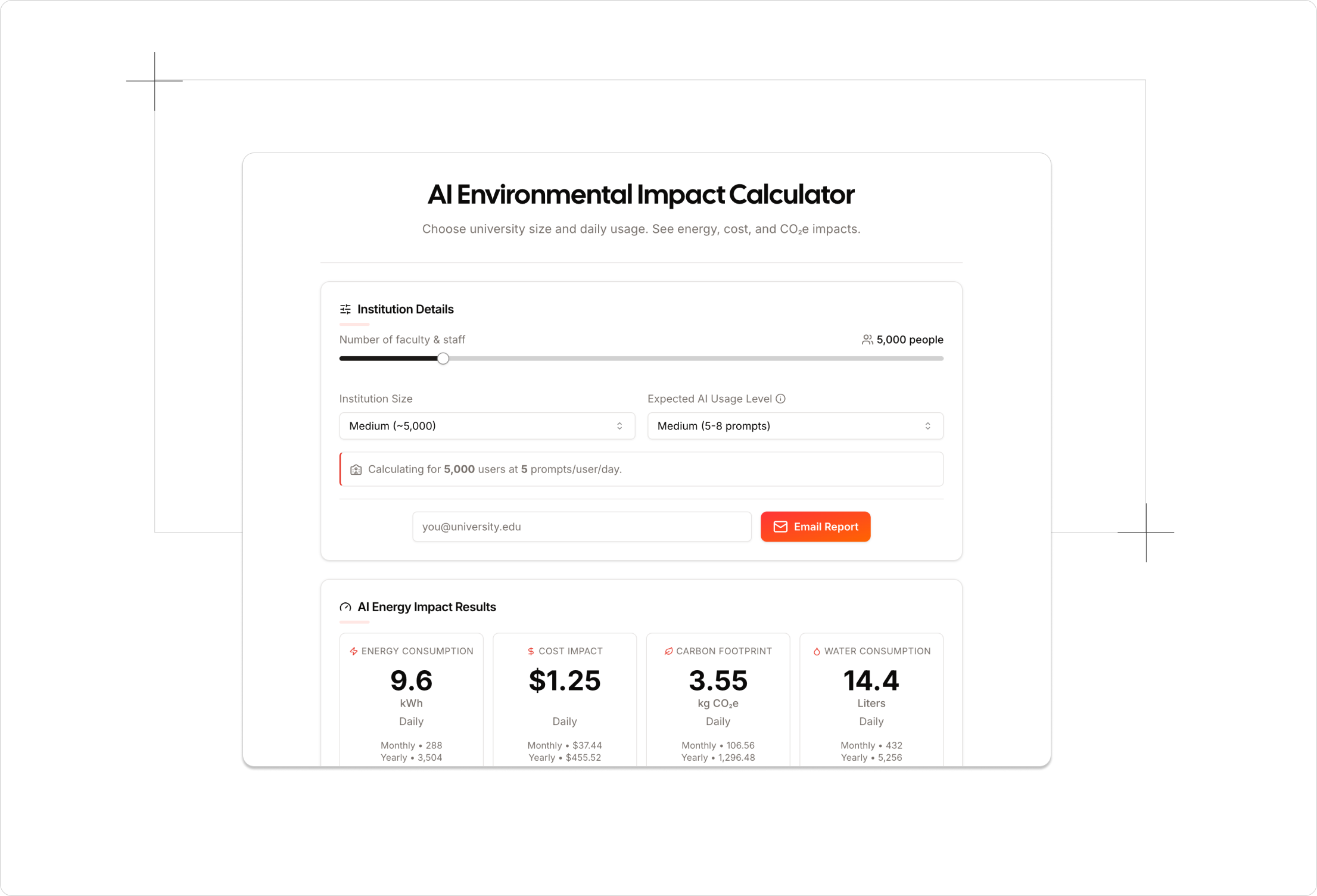
Using the example shown with the calculator, a mid sized institution with around 5,000 faculty and staff and moderate AI usage (5 to 8 prompts per day) would generate:
- 9.6 kWh of electricity daily
- 3.55 kg CO₂e daily
- 14.4 liters of water consumed daily
- Around 1.25 dollars in daily operating cost
For context, the tool also compares AI activity to familiar campus operations. In this scenario:
- Campus wide coffee brewing uses about four times more energy
- Lighting systems use about ten times more energy
- Computer labs, HVAC, and library operations each exceed AI’s load by large margins
- Google search activity alone is similar in scale to AI usage
These comparisons help administrators evaluate the relative footprint of AI instead of viewing it in isolation.
How institutions can use this data
1. Incorporate AI into sustainability reports
Even a small daily footprint should be counted to maintain transparency around digital operations.
2. Assess usage policies and incentives
If prompt volume is expected to grow, setting guidelines or encouraging efficient tools can help manage downstream impact.
3. Coordinate with IT and facilities teams
AI usage load is still modest compared with cooling, lighting, or compute lab operations, but tracking changes over time supports better planning.
4. Bring data to faculty and research leadership
Concrete numbers help leaders feel confident adopting AI in research workflows without misunderstanding environmental cost.
Supporting sustainable research innovation
AI has significant potential to improve research competitiveness, reduce administrative burden, and accelerate discovery. It also introduces a new category of digital resource consumption that universities should understand early, before usage grows exponentially.
Tools like the AI Environmental Impact Calculator give research administrators data that supports responsible, informed adoption. Explore your institution’s numbers here: View the AI Environmental Impact Calculator
More Blog Posts
The 10 Best Grant Databases for 2026
For universities, researchers, and nonprofits
Read post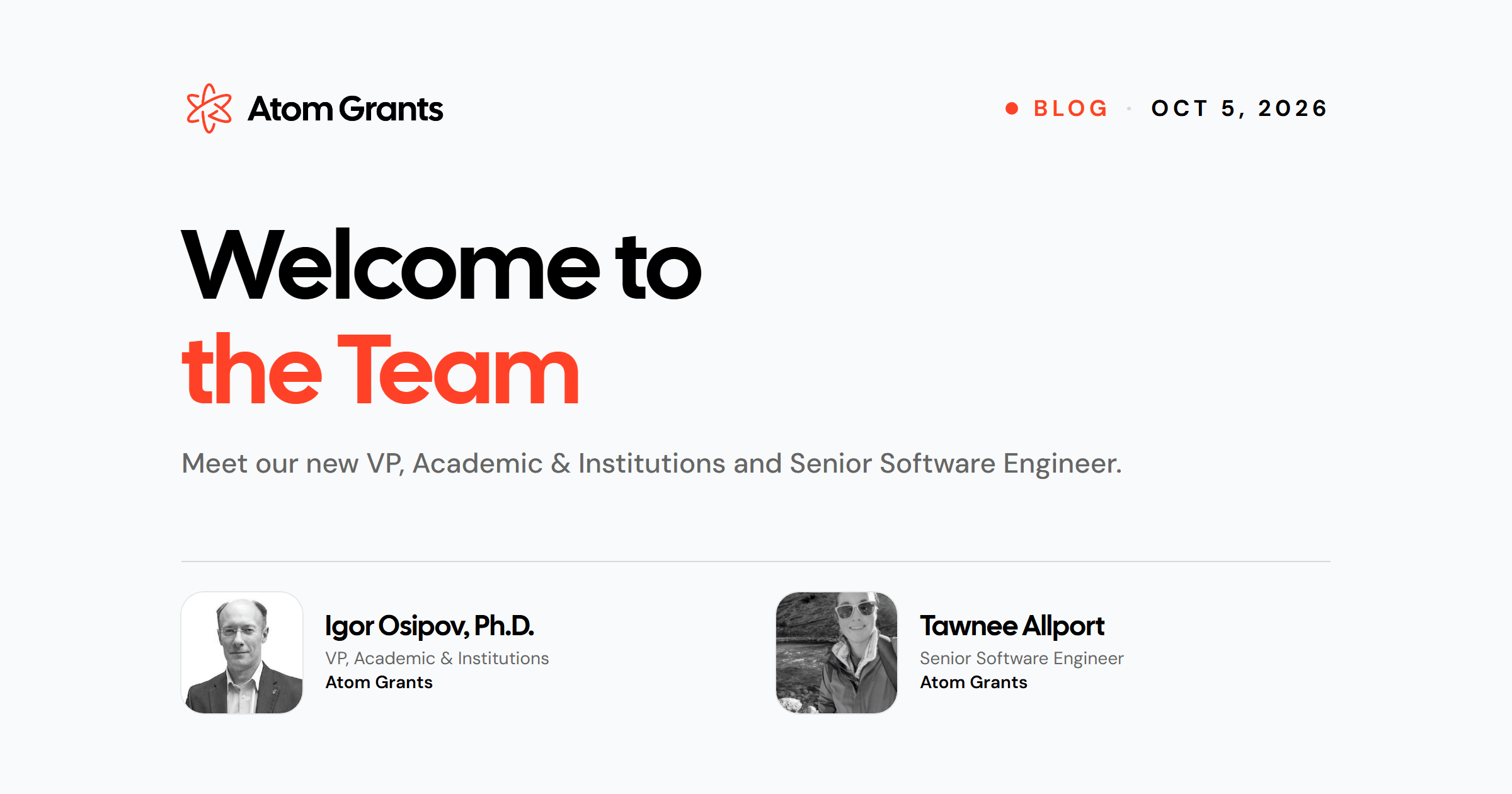
Welcome to the team!
Meet our VP of Academics and Senior Software Engineer
Read post
SRAI Annual Meeting 2026
Leading Research Development in the Age of AI Panel
Read post
Introducing Admin Analytics
The numbers we bring to your check-ins, now in Atom whenever you need them.
Read post
NIH AI Policy: New Rules of AI in Proposal Development
Inside the 2026 NIH policies reshaping how researchers write grants and proposals.
Read post
Budgets, in Atom
A workspace for the whole budget: the spreadsheet, the justification Atom AI can write for you, and the funder rules that grade both.
Read post
Atom AI Reviewer
A funder-grade read of your whole proposal, before anyone else sees the draft.
Read post