Managing AI in Research
What Every Research Administrator Needs to Know
August 6, 2025
Your researchers are already using AI tools like ChatGPT and Claude. The question isn't whether artificial intelligence will transform research at your institution—it's whether you'll be ready to manage that transformation effectively.
The Reality Check
Large Language Models (LLMs) aren't just productivity tools anymore. Researchers are using them to:
- Analyze thousands of documents in hours instead of months
- Generate synthetic survey data when human participants aren't available
- Code qualitative interviews at unprecedented scale
- Extract insights from vast collections of government records and social media
This isn't coming—it's here. And it requires institutional oversight.
The TaMPER Framework: Your 5-Point Action Plan
A new framework by the AI4RA team at university of Idaho called TaMPER gives research administrators a clear roadmap for managing AI in research. Think of it as quality control for the AI age:
T - Task: What is the AI actually doing?
- Require researchers to clearly document AI use cases
- Distinguish legitimate research applications from general productivity use
M - Model: Which AI system and how is it configured?
- Address data privacy (commercial AI = data leaves your institution)
- Manage costs and technical infrastructure needs
- Consider local hosting for sensitive research
P - Prompt: How are researchers interacting with the AI?
- Poor prompts = biased results
- Require documentation of all AI instructions used
E - Evaluation: How do we verify the AI did a good job?
- Mandate validation protocols for AI-assisted research
- Set minimum standards for quality checks
R - Reporting: What must be disclosed about AI use?
- Ensure transparency for peer review and replication
- Meet emerging journal and funder requirements
Three Immediate Actions You Can Take
1. Survey Your Situation
Find out what's already happening. Many researchers are using AI tools without institutional guidance—creating potential compliance and quality issues.
2. Develop Clear Policies
Create guidelines that distinguish between:
- Low-risk uses (analyzing public documents)
- High-risk applications (sensitive data, human subjects research)
- Prohibited uses (confidential data on commercial platforms)
3. Build Support Infrastructure
Provide training and consultation services. Researchers need both technical skills and methodological guidance to use AI responsibly.
Why This Matters Now
Funding agencies are beginning to require AI use disclosure in proposals and reports.
Journals are establishing new standards for AI transparency in publications.
Institutional review boards may need updated protocols for AI-assisted research.
Legal and compliance teams need clear policies for data privacy and risk management.
The Bottom Line
AI in research is like the introduction of statistical software in the 1980s or online databases in the 1990s—a fundamental shift that requires institutional adaptation. The difference is the speed of change and the breadth of impact.
Your researchers will use these tools. Your choice is whether they'll use them well, with proper oversight, training, and quality controls—or whether they'll improvise without institutional support.
The TaMPER framework gives you a structured way to ensure AI enhances rather than undermines research quality at your institution.
Ready to dig deeper? Check out our comprehensive guide to implementing AI governance in research institutions.
More Blog Posts
The 10 Best Grant Databases for 2026
For universities, researchers, and nonprofits
Read post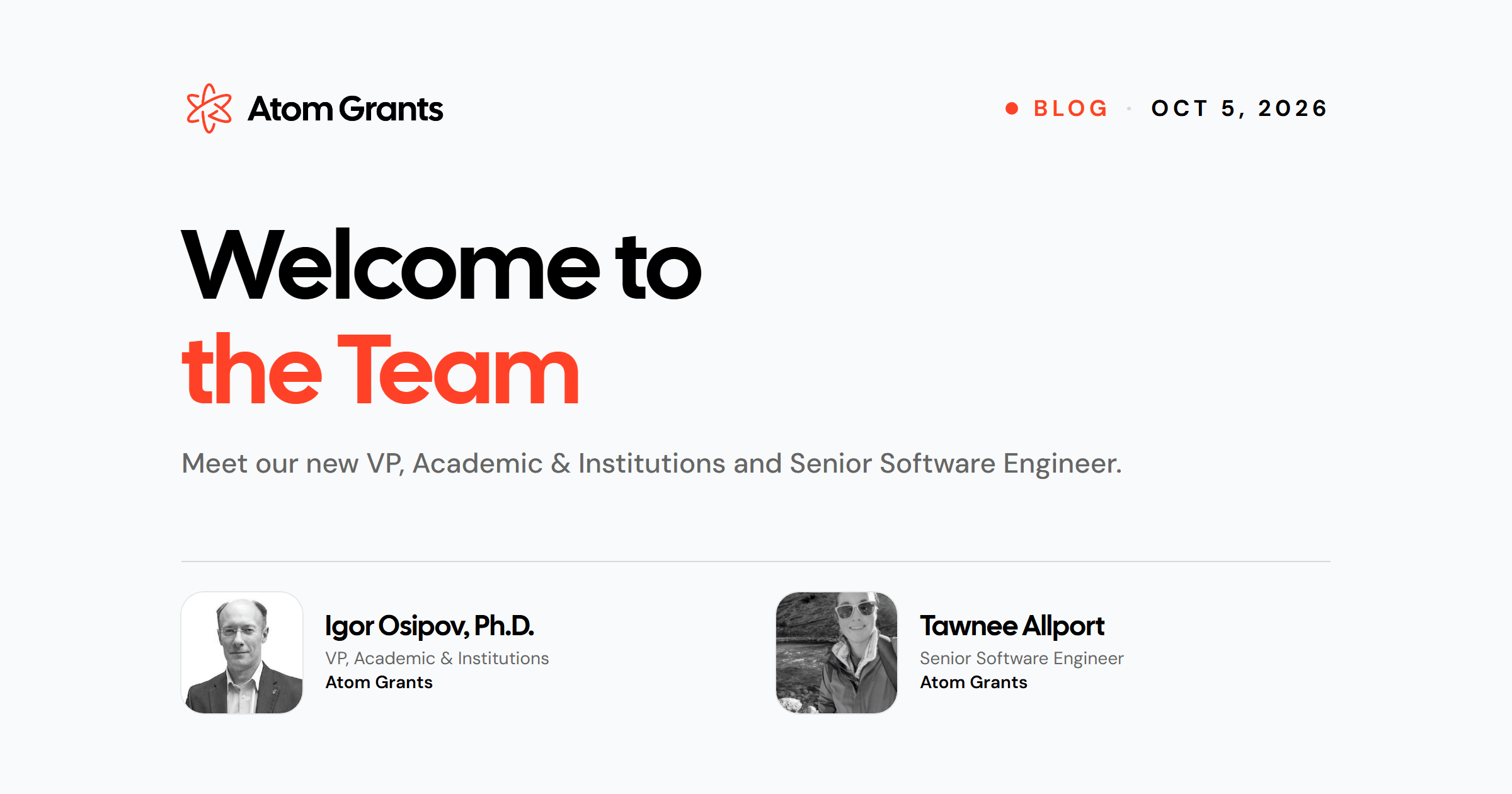
Welcome to the team!
Meet our VP of Academics and Senior Software Engineer
Read post
SRAI Annual Meeting 2026
Leading Research Development in the Age of AI Panel
Read post
Introducing Admin Analytics
The numbers we bring to your check-ins, now in Atom whenever you need them.
Read post
NIH AI Policy: New Rules of AI in Proposal Development
Inside the 2026 NIH policies reshaping how researchers write grants and proposals.
Read post
Budgets, in Atom
A workspace for the whole budget: the spreadsheet, the justification Atom AI can write for you, and the funder rules that grade both.
Read post
Atom AI Reviewer
A funder-grade read of your whole proposal, before anyone else sees the draft.
Read post