Making Clinical Research Understandable With AI
Turning Complex Clinical Research Into Plain Language for Patients
April 8, 2026
While many institutions still struggle to make clinical research understandable for everyday patients, Kimberly Weeks at Denver Health is building practical AI workflows that translate dense trial language into concise, patient-friendly summaries. Her approach is not about replacing judgment. It is about speeding up communication while protecting trust, accuracy, and mission alignment in a safety-net healthcare system.

Meet Kimberly Weeks and Denver Health
Kimberly Weeks is a Communication Strategist for the Denver Health Office of Academic Affairs. Denver Health is both a safety-net healthcare system and an academic medical center, serving a large Medicaid and Medicare population, including many underserved communities and many Spanish-first households.
That context matters. Clinical research language is often written for compliance and scientific rigor, not patient comprehension. At Denver Health, that creates a real gap between the intent of a study and what patients feel confident saying yes to.
The Core Problem: Language Was Blocking Trust
One of the clearest themes from this conversation was simple: if people cannot understand the what and why of a clinical trial, participation becomes unlikely.
For many patients, medical decisions happen amid daily pressure, family responsibilities, work, transportation, finances, and existing health stress. When trial information is overloaded with acronyms and technical wording, it can feel distant and risky.
Kimberly framed this as a trust and relevance problem. Institutions communicate in specialist language, while patients need clear explanations tied to practical outcomes.
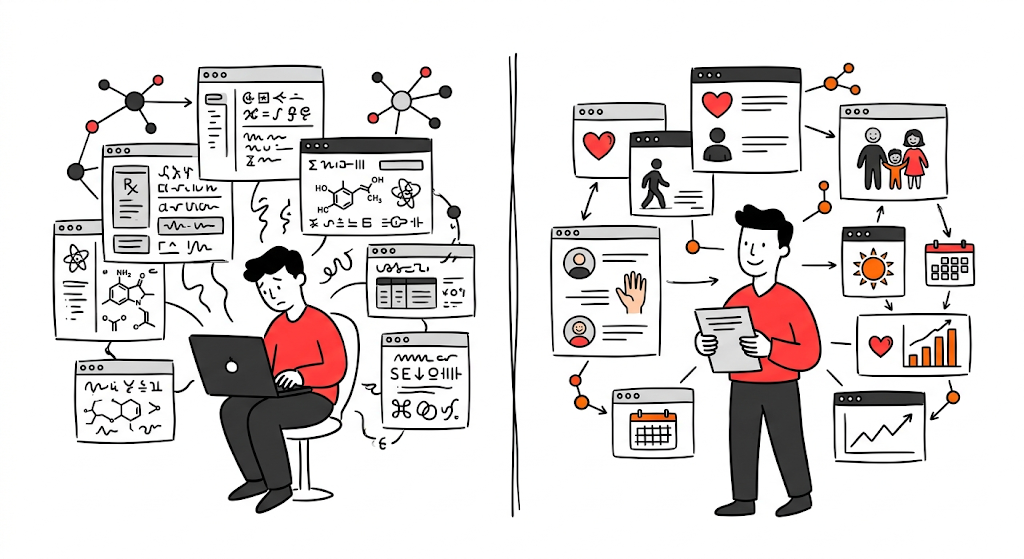
From Spreadsheet to Plain Language
Kimberly described receiving a spreadsheet of active and enrolling studies with titles and descriptions pulled from internal systems. The content was technically accurate, but hard for non-specialists to interpret.
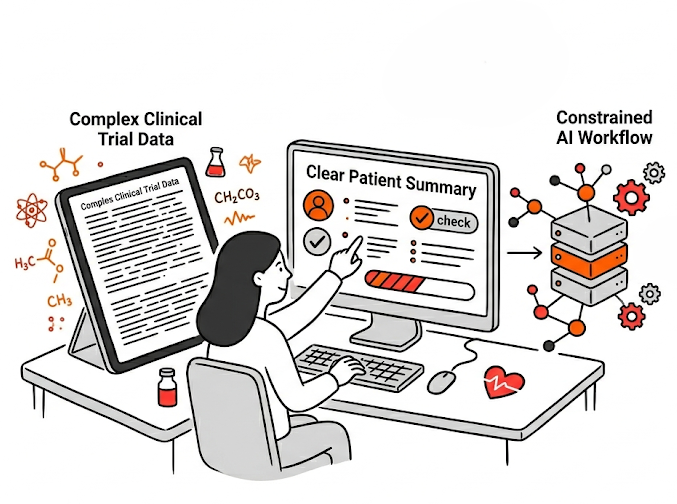
Her initial AI workflow was direct: feed in study title and description fields, generate plain-language drafts, standardize them into concise summaries, and manually review every line.
The result was a structured set of short, patient-facing descriptions that made studies easier to scan and compare. She also enforced a brevity rule, targeting around 20 words per summary, then editing each line before publication. That constraint improved both readability and consistency across dozens of studies.
Human-in-the-Loop Was Non-Negotiable
Kimberly was clear that speed only matters when paired with strong review. Early testing surfaced predictable risks, including fabricated details and incorrect framing when prompts were loose.
Her response was to tighten controls in four concrete ways:
- Stricter prompt templates
- Explicit formatting rules
- Aggressive fact-checking for names and credentials
- Manual approval before anything goes live
The takeaway is practical. AI can accelerate communication work, but credibility still depends on human quality control.
What Changed at Denver Health
One of the earliest outcomes was visibility. Patient-friendly research content became easier to publish and easier to navigate, helping position research as a visible part of Denver Health's public mission rather than a hidden institutional function.
As systems like MyChart continue evolving to support research-interest pathways, communication quality becomes even more important. Better descriptions improve matching and support clearer patient choice.
A Bigger Mission: Reducing Suffering Through Better Communication
When asked what drives her work, Kimberly offered a clear throughline: reduce suffering.
That mission shows up in her view of institutional communication. Healthcare systems do lifesaving work, but they still have to translate that work into language people can understand, evaluate, and act on.
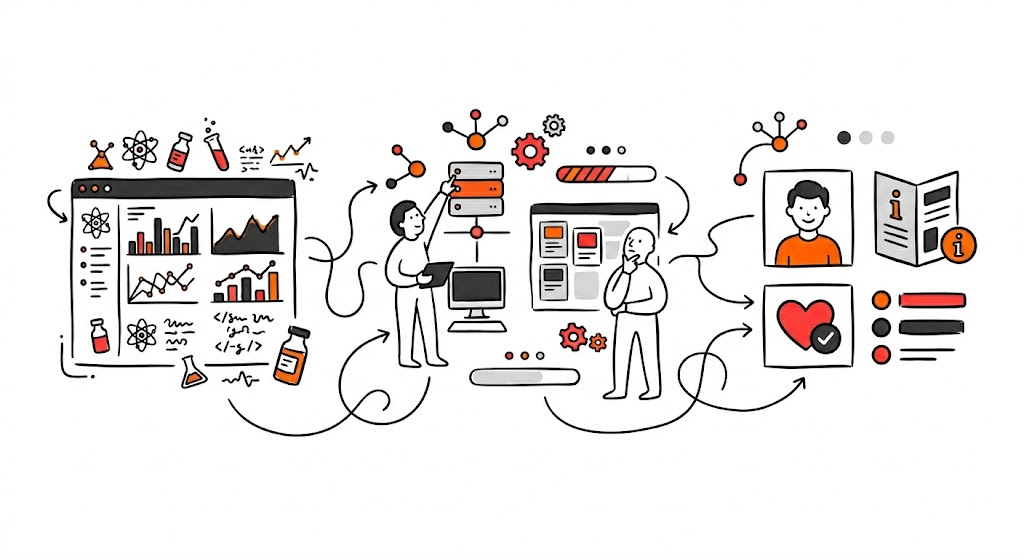
For teams building AI workflows in research administration, this conversation offers a practical model: start with one high-friction communication bottleneck, build a constrained workflow around that use case, keep humans in charge of final judgment, and optimize for real people, not internal systems.
How You Can Support This Work
Kimberly was direct about what institutions like Denver Health need most: stronger channels to sustainable, mission-aligned funding.
If you are in philanthropy, healthcare innovation, or research leadership, there is an opportunity to support communication infrastructure that directly improves access, inclusion, and patient participation in research.
Connect With Kimberly Weeks
The best way to connect is through LinkedIn: https://www.linkedin.com/in/weekswell/
Final Thought
Scientific progress does not speak for itself. It has to be translated, contextualized, and delivered in language that meets people where they are. This conversation with Kimberly Weeks shows how responsible AI can help institutions do exactly that.
Getting Started
Start small. Use AI to summarize one active study your team already knows well, then compare the output against your internal understanding.
That first comparison usually reveals the core truth: expertise is still required. AI handles mechanical drafting. Humans interpret nuance, risk, and intent.
What's Next
Healthcare systems are being asked to expand participation and improve communication without significantly expanding staff. In that environment, practical AI workflows shift from optional to necessary.
The next phase is not full automation. It is repeatable, human-reviewed systems that make patient-facing communication faster, clearer, and more inclusive.
Watch the Video
Watch the full conversation here: Full Conversation
Using Atom's AI System to Streamline Funding Discovery
Individual workflows are powerful, but institutional success requires a scalable system. Many research offices still lose time to the same recurring pain points:
- Fragmented funding searches across multiple databases
- Spreadsheet workflows that become outdated quickly
- Administrative overload that pulls teams away from strategy
If you are facing these bottlenecks, explore our case studies to see how peer institutions use Atom Grants to move from manual coordination to AI-assisted research development. To see what this can look like for your team, book a demo.
About Kimberly Weeks
Kimberly Weeks is a Communication Strategist in the Denver Health Office of Academic Affairs. She focuses on making clinical research understandable for patients through plain-language content, responsible AI use, and rigorous human review.
LinkedIn: https://www.linkedin.com/in/weekswell/
About the Author
 Raphaël Bernier
Head of Growth, Atom Grants
Helping universities modernize research development with AI to reduce admin burden, increase faculty engagement, and improve proposal success.
LinkedIn: https://www.linkedin.com/in/raph-bernier/
Contact: raphael@atomgrants.com
Location: New York
More Blog Posts
The 10 Best Grant Databases for 2026
For universities, researchers, and nonprofits
Read post
Welcome to the team!
Meet our VP of Academics and Senior Software Engineer
Read post
SRAI Annual Meeting 2026
Leading Research Development in the Age of AI Panel
Read post
Introducing Admin Analytics
The numbers we bring to your check-ins, now in Atom whenever you need them.
Read post
NIH AI Policy: New Rules of AI in Proposal Development
Inside the 2026 NIH policies reshaping how researchers write grants and proposals.
Read post
Budgets, in Atom
A workspace for the whole budget: the spreadsheet, the justification Atom AI can write for you, and the funder rules that grade both.
Read post
Atom AI Reviewer
A funder-grade read of your whole proposal, before anyone else sees the draft.
Read post